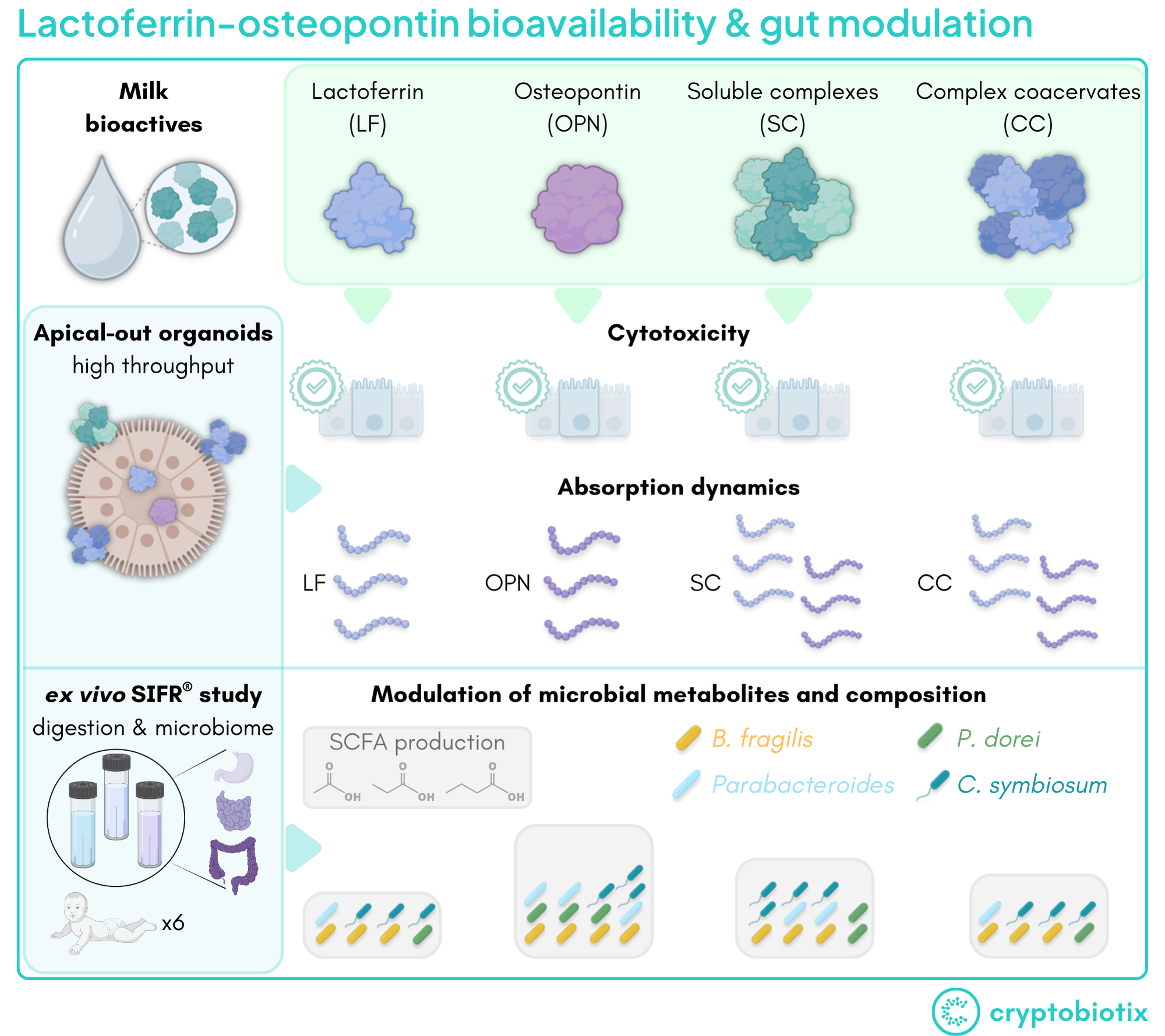
Lactoferrin (LF) and osteopontin (OPN) are milk bioactives with various benefits. In the present study, their bioavailability, cytotoxity and impact on the infant gut microbiome were investigated, alone and in complexes. No adverse effect was reported on an apical-out organoid model, that further demonstrated a similar uptake of LF and OPN alone vs in complexes. In a second step, the validated SIFR technology was implemented, taking into account the specifics of the upper gastrointestinal digestion (in vitro) and gut microbiome fermentation (ex vivo) for infants.
The SIFR investigation suggests a stimulation of key fermentative parameters like SCFAs, including butyrate which is quite noteworthy in infants. Additionally, LF, OPN and the complexes stimulated specific bacterial taxa at various rates: B. fragilis, Parabacteroides, P. dorei and C. symbiosum.
Full article: Ceroni et al, 2025, Nature Communications