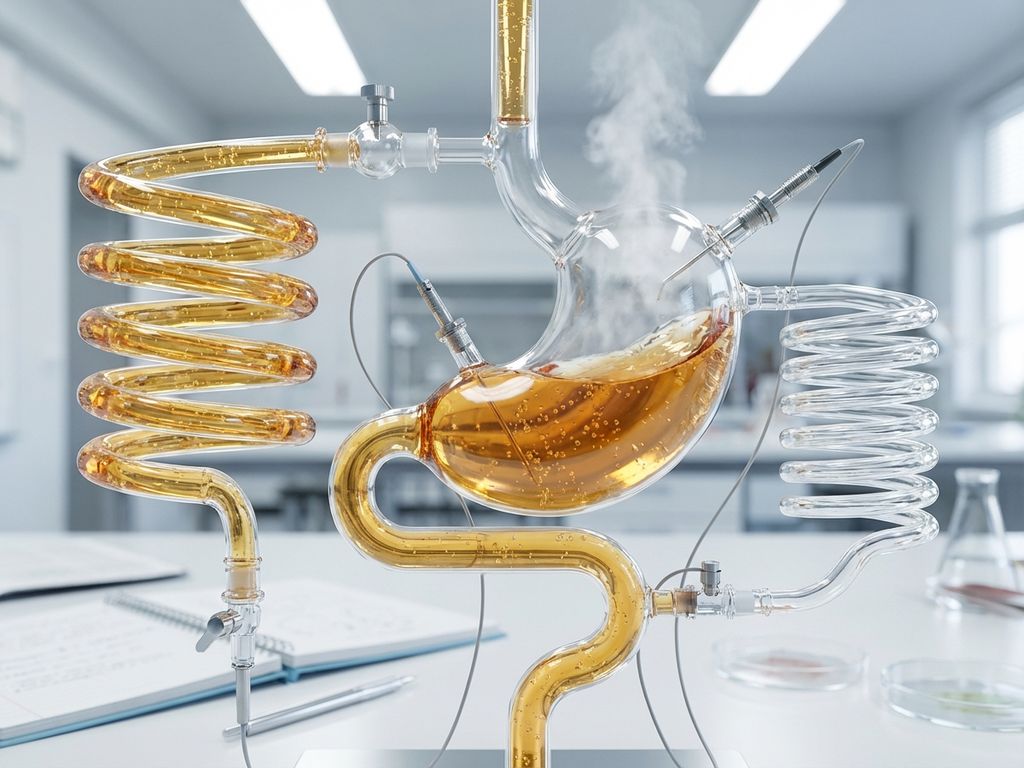
Gut models are sophisticated laboratory systems that replicate the complex processes of human digestion and gut microbiome interactions. These ex vivo technologies simulate stomach acid, digestive enzymes, and colonic fermentation to predict how products will behave in the human digestive system. They bridge the critical gap between preclinical research and clinical outcomes, enabling researchers to study gut microbiome responses without human testing while generating data that accurately forecast clinical trial results.
What are gut models and why do they matter for research?
Gut models are laboratory systems that replicate human digestive processes and gut microbiome environments under controlled conditions. They simulate the complex interactions between ingested products and the trillions of bacteria residing in our digestive tract, providing crucial insights without requiring human subjects.
These models matter because they address what researchers call the “Valley of Death” in microbiome research – the poor translation of findings from traditional laboratory studies to human clinical outcomes. Legacy preclinical models often fail to predict human responses, leading to high failure rates in expensive clinical trials.
The human gut presents a harsh, dynamic environment where products must survive stomach acid, bile salts, digestive enzymes, and intense competition from established gut bacteria. Standard laboratory conditions using sterile petri dishes with optimal pH cannot replicate these real-world challenges. Gut models bridge this gap by recreating the authentic conditions products encounter in human digestion.
How do ex vivo gut models replicate the human digestive system?
Ex vivo gut models simulate the entire digestive journey by recreating stomach acid conditions, digestive enzymes, intestinal transit times, and colonic fermentation processes. They use fresh, unmodified human microbiota samples to maintain the original microbial composition throughout testing.
The simulation begins with upper gastrointestinal processes, including mouth, stomach, and small intestine conditions. Advanced models implement protocols based on established frameworks like INFOGEST 2.0 to ensure biorelevant findings for complex products. The process maintains appropriate pH levels, oxygen conditions, and nutrient availability that mirror real gut environments.
For colonic fermentation, these models preserve individual donor characteristics while simulating the anaerobic conditions where most gut microbiome activity occurs. The technology maintains the microbiome as if it were a biopsy, demonstrating that the microbial community remains stable and similar to its original state through parallel no-substrate controls.
What makes gut simulation models predictive for clinical outcomes?
Predictive accuracy comes from published validation studies that demonstrate direct correlation between model results and human clinical trial outcomes. Reliable models must preserve the original microbial composition from sample collection through fermentation, maintaining physiological relevance throughout the process.
The strongest evidence for predictivity includes validation for microbial composition, functional effects through metabolomics, and even the prediction of plasma metabolites. Gas production serves as a reliable proxy for tolerability, while gut barrier integrity and immune parameters can be assessed through coupled cell models.
A key principle underlying this predictivity is that microbiome effects are immediate, whereas host health outcomes are progressive. Gut bacteria respond to interventions within hours, altering their metabolism and composition. This immediate microbial shift initiates host responses, with health benefits accumulating over time with continued exposure. Validated models capture this foundational microbial event that drives long-term clinical outcomes.
How do researchers use gut models to study microbiome interactions?
Researchers employ gut models to investigate probiotic efficacy, prebiotic fermentation, drug–microbiome interactions, and personalised nutrition responses across different population groups and disease states. These models enable comprehensive analysis of how products modulate gut bacteria without human testing.
The technology can simulate diverse gut microbiota from various populations, including infants, adults, elderly individuals, and different disease states. For animal health applications, models can be adapted for cat, dog, poultry, and swine microbiomes using appropriate incubation conditions and protocols.
Advanced implementations use quantitative sequencing to calculate absolute microbial abundances, combining relative abundance data with total cell counts. This approach removes bias caused by changes in bacterial cell density, providing more accurate assessment of treatment impacts. Models can also be coupled with human cell cultures to investigate downstream effects on gut wall integrity, immune system responses, and satiety markers such as GLP-1 production.
What are the advantages of gut models over traditional testing methods?
Gut models offer significant advantages over animal studies and direct human trials, including dramatically reduced timelines, cost-effectiveness, ethical benefits, and the ability to test multiple conditions simultaneously with enhanced reproducibility.
Animal models have substantial limitations for human gut microbiome research. Animal microbiomes differ taxonomically and functionally from human microbiomes, with different digestive physiology including gut transit times, pH levels, and bile acid profiles. This leads to non-translatable results with limited scientific rationale for their use.
Ex vivo testing is typically 60–80% less expensive than animal studies while providing human-relevant data. Modern regulatory frameworks, including the FDA Modernization Act 2.0 and EU directives, actively promote non-animal approaches. Gut models can process over 1,000 conditions per week through automation, enabling comprehensive analysis across multiple donor cohorts to assess interindividual variability and identify responder populations.
How does Cryptobiotix help with gut digestion simulation?
Cryptobiotix provides the SIFR® technology platform, a validated ex vivo gut simulation system that delivers predictive insights for regulatory dossier preparation, clinical trial de-risking, and mechanistic evidence generation for product development across food, pharmaceutical, and biotechnology sectors.
Our SIFR® technology offers comprehensive solutions including:
- Validated ex vivo gut microbiome simulation with proven clinical predictivity
- High-throughput screening capabilities processing multiple conditions simultaneously
- Multi-omics analysis providing mechanistic insights for regulatory submissions
- Biobanking services with cryo-stabilised gut microbiome samples for immediate access
- Integration with digestion models and host–microbiome interaction studies
- Regulatory-grade data suitable for EFSA, FDA, and Health Canada submissions
Whether you are preparing novel food applications, GRAS notifications, or pharmaceutical regulatory dossiers, our validated approach provides the mechanistic evidence regulatory agencies increasingly demand. Explore our applications across industries or contact us to discuss how SIFR® technology can support your regulatory submission timelines and data quality requirements.
Frequently Asked Questions
How long does it typically take to get results from gut model testing compared to clinical trials?
Gut model testing typically delivers results within 2-4 weeks, compared to 6-18 months for clinical trials. This dramatic time reduction allows researchers to rapidly iterate product formulations, test multiple conditions simultaneously, and make data-driven decisions before committing to expensive human studies.
Can gut models predict individual responses or only population-level effects?
Advanced gut models can assess both population-level trends and individual variability by testing products across multiple donor microbiomes representing different demographics, ages, and health states. This approach helps identify responder populations and potential personalized nutrition opportunities before clinical testing.
What sample types and volumes are needed to run gut model experiments?
Most gut models require relatively small product samples – typically 1-10mg for pure compounds or 100mg-1g for complex formulations. Fresh stool samples from donors are processed immediately or cryo-preserved, with each donor sample supporting multiple experimental conditions across different time points.
How do you validate that your gut model results will translate to real clinical outcomes?
Validation involves comparing model predictions to published clinical trial data for the same products or similar interventions. The strongest validation includes demonstrating correlation between microbial changes, metabolite production, and functional outcomes like gas production for tolerability predictions across multiple independent studies.
What are the main limitations or scenarios where gut models might not be suitable?
Gut models excel at predicting immediate microbial responses but cannot directly measure long-term host health outcomes, systemic absorption, or complex multi-organ interactions. They're less suitable for studying products that require weeks of adaptation or those with primary effects outside the gut microbiome.
How do you choose the right donor microbiomes for testing a specific product?
Donor selection depends on your target population and research objectives. For general products, testing across healthy adult donors of different ages provides broad applicability. For condition-specific products, using microbiomes from relevant patient populations (elderly, metabolic disorders, etc.) increases clinical relevance and regulatory acceptance.
What regulatory agencies accept gut model data, and how should it be presented in submissions?
EFSA, FDA, and Health Canada increasingly accept validated gut model data as mechanistic evidence in regulatory dossiers. Present results alongside validation studies demonstrating clinical predictivity, include detailed methodology following established protocols like INFOGEST 2.0, and emphasize multi-omics data showing both microbial composition and functional metabolite changes.