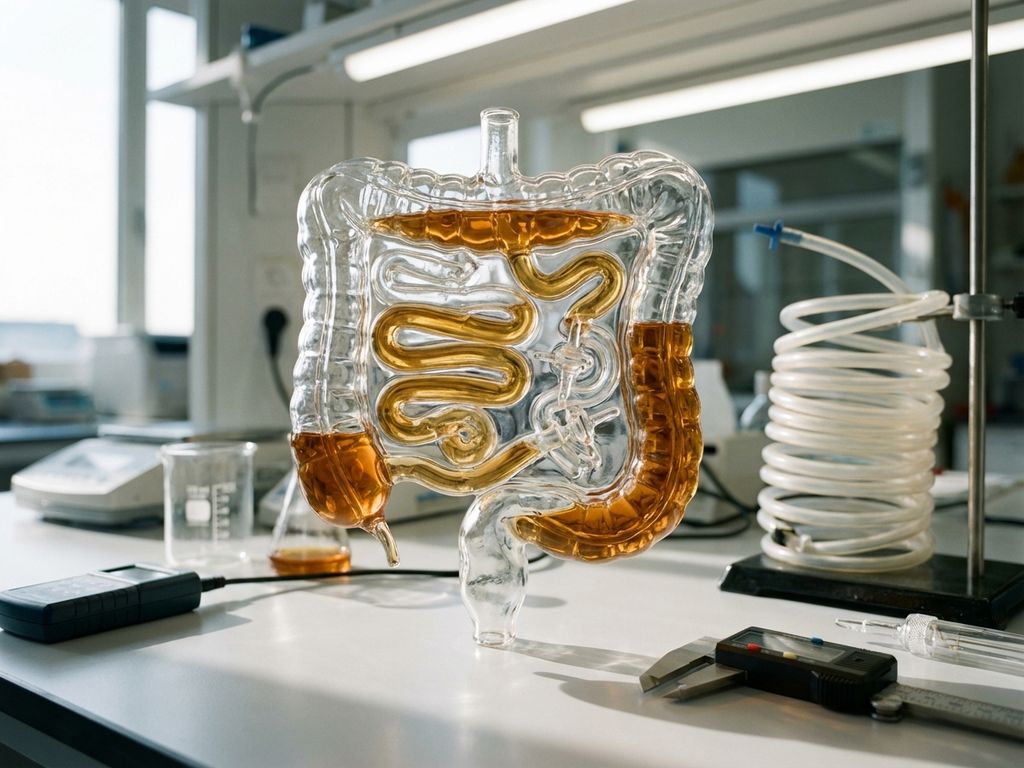
A gut model simulates the complex digestive processes, microbial fermentation, and host interactions that occur throughout the human gastrointestinal tract. These sophisticated systems replicate conditions from stomach acid exposure to colonic fermentation, enabling researchers to predict how products will behave in the human gut without requiring lengthy clinical trials.
What exactly does a gut model simulate in human digestion?
Gut models simulate the complete digestive journey, replicating mechanical breakdown, enzymatic processes, pH variations, and transit times from stomach to colon. Advanced systems incorporate gastric acid conditions (pH 1.5–2.0), bile salt exposure, digestive enzyme activity, and the gradual pH changes that occur throughout intestinal transit.
The simulation begins with gastric conditions, where products face harsh acidic environments and pepsin activity. Models then replicate small intestinal conditions with pancreatic enzymes, bile salts, and alkaline pH levels around 7–8. For comprehensive analysis, sophisticated gut models incorporate INFOGEST 2.0 protocols to ensure biorelevant simulation of upper gastrointestinal processes.
Transit times are carefully controlled to mirror human physiology, typically allowing 2–4 hours for gastric emptying and 3–5 hours for small intestinal passage. The colonic phase extends this simulation to 24–48 hours, matching the residence time where most microbial fermentation occurs. This temporal accuracy ensures that researchers observe realistic interactions between test substances and digestive processes.
How do gut models replicate the complex microbiome ecosystem?
Advanced gut models recreate microbial fermentation by maintaining fresh, unmodified human microbiota under controlled anaerobic conditions that preserve the original bacterial composition and metabolic activity. The most sophisticated systems use ex vivo approaches that maintain donor-specific microbial characteristics throughout fermentation.
These models simulate the dynamic bacterial ecosystem through carefully controlled environmental parameters, including oxygen-free conditions, appropriate nutrient availability, and physiological pH levels. The fermentation process captures cross-feeding interactions between different bacterial species, metabolite production patterns, and competitive dynamics that define healthy gut microbiome function.
Quantitative sequencing techniques measure both relative and absolute bacterial abundances, providing accurate assessments of how interventions affect total microbial populations. This approach avoids the bias inherent in traditional methods, where changes in total bacterial density can create misleading results about individual species’ responses.
What are the key differences between in vivo, in vitro, and ex vivo gut simulation approaches?
In vivo studies use living animals or humans, in vitro methods employ artificial laboratory conditions, while ex vivo approaches use fresh biological samples maintained outside the body under physiological conditions. Each methodology offers distinct advantages and limitations for preclinical research applications.
Animal in vivo models face significant limitations due to fundamental physiological differences from humans. Animal microbiomes differ taxonomically and functionally, with variations in gut transit times, pH levels, and bile acid compositions leading to non-translatable results. Modern regulatory frameworks, including the FDA Modernization Act 2.0, actively promote alternatives to animal testing.
Traditional in vitro models often suffer from artificial conditions that poorly represent human gut environments. Many use only 1–3 parallel microbiota samples, which is insufficient for capturing human population variability. Ex vivo methodologies typically cost 60–80% less than animal studies while providing superior human relevance and predictive accuracy for clinical outcomes.
Why do researchers need gut models instead of just clinical studies?
Researchers require gut models because clinical studies are expensive, time-consuming, and ethically complex, while controlled laboratory conditions allow rapid testing of multiple variables simultaneously. Gut models provide mechanistic insights within days rather than the weeks or months required for clinical trials.
The concept of immediate modulation versus progressive outcomes explains this necessity. Microbiome effects occur within hours as bacteria respond to interventions by altering their metabolism and composition. Clinical health benefits accumulate over time with continued exposure, but the foundational microbial changes that drive these outcomes can be captured immediately through sophisticated gut simulation.
Cost-effectiveness represents another crucial factor. Preclinical gut models enable researchers to screen multiple formulations, dosages, and target populations before committing to expensive clinical programs. This approach reduces the risk of clinical trial failure while providing the mechanistic evidence increasingly demanded by regulatory agencies like EFSA and the FDA for product approvals.
How Cryptobiotix helps with gut model simulation research
We provide validated gut simulation solutions through our proprietary SIFR® technology, which bridges the gap between preclinical data and clinical outcomes using ex vivo methodology that maintains human microbiome authenticity throughout testing.
Our comprehensive research services include:
- Validated predictive testing – SIFR® technology demonstrates proven correlation with clinical trial outcomes through published validation studies
- High-throughput screening – Processing over 1,000 bioreactors weekly with automated systems that ensure technical reproducibility
- Multi-omics analysis – Proprietary data pipeline covering taxonomy, metabolomics, and host–microbiome interactions
- Regulatory-grade reporting – Comprehensive documentation suitable for patent applications, regulatory dossiers, and clinical trial preparation
Our applications span the food and nutrition, pharmaceutical, biotechnology, and animal health sectors. We support product development from early R&D screening through regulatory submission preparation, providing the mechanistic evidence needed for successful market authorization.
Ready to accelerate your product development with validated gut simulation research? Contact our team to discuss how SIFR® technology can de-risk your clinical programs and provide the scientific evidence required for regulatory success.
Frequently Asked Questions
How long does it typically take to get results from gut model testing compared to clinical trials?
Gut model testing typically delivers comprehensive results within 2-4 weeks, including complete microbiome analysis and metabolite profiling. In contrast, clinical trials require 3-12 months for completion, plus additional time for data analysis. This 10-20x speed advantage allows researchers to rapidly iterate formulations and optimize products before investing in costly human studies.
What sample size is needed for statistically meaningful gut model results?
Most gut model studies require 15-20 individual donor samples to capture human population variability and achieve statistical significance. This contrasts with traditional in vitro methods that often use only 1-3 samples. The larger sample size ensures results are representative of diverse human microbiomes and increases confidence in translating findings to clinical populations.
Can gut models predict side effects or safety issues before clinical testing?
Yes, gut models can identify potential safety concerns by monitoring inflammatory markers, barrier function indicators, and harmful metabolite production. They detect microbiome disruptions that could lead to dysbiosis or identify products that may cause digestive discomfort. However, systemic safety assessment still requires additional toxicology studies and eventual clinical validation.
How do you validate that gut model results will translate to actual human clinical outcomes?
Validation involves comparing gut model predictions with published clinical trial data for the same or similar interventions. Advanced platforms like SIFR® technology have demonstrated correlation between ex vivo microbiome changes and clinical health outcomes through peer-reviewed validation studies. Key validation markers include consistent bacterial population shifts, metabolite profiles, and functional pathway changes.
What types of products or interventions work best with gut model testing?
Gut models excel at testing probiotics, prebiotics, functional foods, dietary supplements, and pharmaceutical compounds that target the microbiome. They're particularly valuable for products with complex formulations, novel ingredients, or those requiring specific dosage optimization. Products targeting systemic health through microbiome modulation also benefit significantly from this approach.
How much does gut model testing cost compared to running a clinical trial?
Gut model testing typically costs 60-80% less than equivalent animal studies and represents a fraction of clinical trial expenses. While clinical trials can cost $100,000-$1M+ depending on scope, comprehensive gut model studies range from $10,000-$50,000. This cost-effectiveness allows companies to test multiple formulations and optimize products before committing to expensive clinical programs.
What regulatory agencies accept gut model data for product approval submissions?
The FDA, EFSA, and other major regulatory bodies increasingly accept well-designed gut model data as supporting evidence for health claims and product approvals. While clinical trials remain the gold standard for efficacy claims, gut model data provides crucial mechanistic evidence that strengthens regulatory dossiers and can support GRAS determinations and novel food applications.