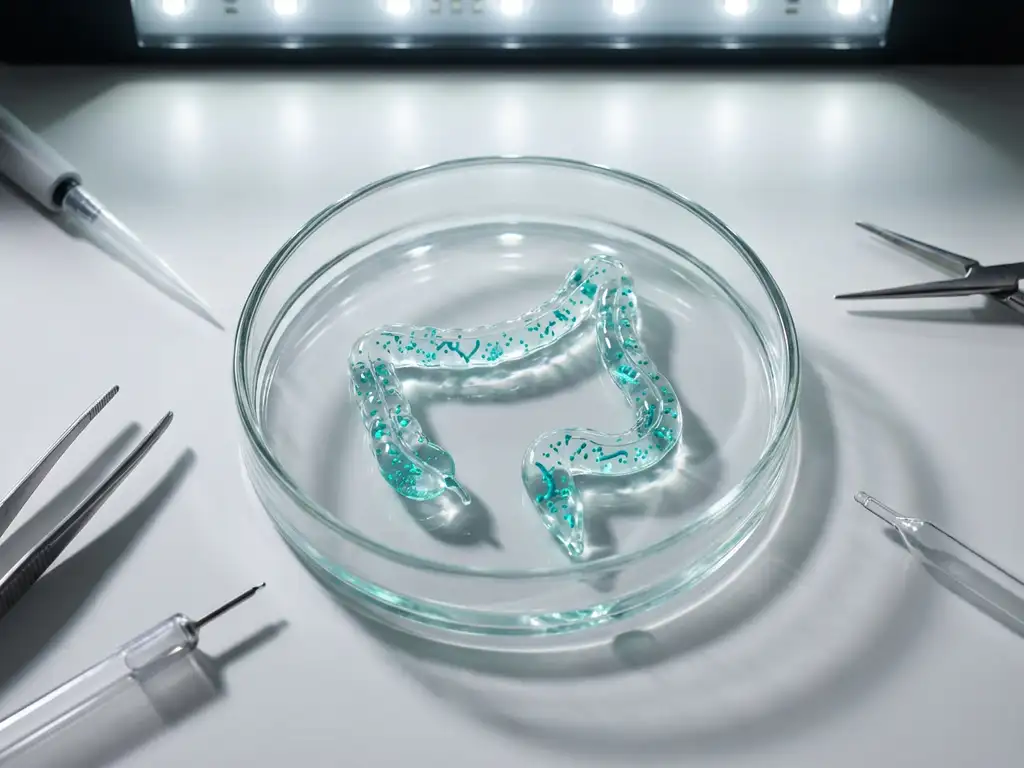
Ex vivo gut microbiome models achieve superior predictive accuracy by preserving the original microbial community structure and metabolic activity of human donor samples. Unlike traditional testing methods that suffer from in vitro bias or interspecies differences, ex vivo models maintain the microbiome “as if it were a biopsy,” enabling them to mirror clinical outcomes within 24–48 hours rather than requiring weeks of testing.
What makes ex vivo gut microbiome models different from traditional testing methods?
Ex vivo gut microbiome models preserve the original donor microbiota composition throughout fermentation, maintaining individual characteristics without adaptation or selection bias. This approach fundamentally differs from animal models, which have different taxonomic compositions, gut transit times, and bile acid profiles that do not translate to human outcomes.
Traditional in vitro models often use adapted microbial communities that bear little resemblance to the original donor sample. These systems create pronounced selection bias, in which fast-growing species dominate while important taxa disappear entirely. The 3R principle (Replacement, Reduction, Refinement) and modern regulatory frameworks, such as the FDA Modernization Act 2.0, actively promote moving away from animal approaches due to their limited relevance to human gut microbiome research.
Ex vivo technologies bridge this gap by using fresh, unmodified human gut microbiota samples. The definitive criterion for true ex vivo classification requires scientific publications showing both starting and endpoint microbiome compositions, demonstrating community stability without product intervention by using parallel no-substrate controls.
Why do ex vivo models predict clinical outcomes more accurately?
Ex vivo models predict clinical outcomes with remarkable accuracy because they capture the immediate microbial responses that drive longer-term health benefits. Gut bacteria respond to interventions within hours, altering growth rates and metabolic activity in ways that initiate host responses observed in clinical trials.
The key insight is that microbiome modulation is immediate while health outcomes are progressive. Ex vivo models validate the causal microbial events within 24–48 hours that accumulate into the clinical benefits seen after weeks of repeated administration. This eliminates the “Valley of Death” between preclinical data and clinical outcomes that plagues traditional testing approaches.
Validation studies demonstrate that properly implemented ex vivo systems can predict clinical trial results for microbial composition changes, metabolite production, and even tolerability markers. Maintained microbial diversity and realistic fermentation conditions allow these models to capture inter-individual variability, identifying responder versus non-responder profiles before expensive clinical trials begin.
How do ex vivo gut models simulate real digestive conditions?
Ex vivo gut models recreate physiologically relevant conditions by controlling pH, nutrient availability, oxygen concentrations, and temperature to mirror the human colon environment. These systems maintain the complex ecosystem interactions that occur naturally in the gastrointestinal tract.
The preservation of host–microbiome interactions represents a crucial advantage over simplified laboratory conditions. Ex vivo models can be coupled with human cell cultures to investigate downstream effects on gut barrier integrity, immune responses, and metabolic markers such as GLP-1 production. This integrated approach provides mechanistic insights into how test substances affect host health through microbiome modulation.
Unlike traditional batch fermentation approaches that use poorly adapted media and suboptimal practices, validated ex vivo implementations employ rigorous, automated protocols. The modular design enables comprehensive gastrointestinal simulation while maintaining the biorelevance necessary for clinical predictivity across diverse applications.
What can ex vivo models reveal about product mechanisms that other methods miss?
Ex vivo models provide unique insights into real-time metabolite production, microbial community shifts, and dose–response relationships that traditional methods cannot capture. These systems provide mechanistic insight into how products interact with diverse gut ecosystems without the bias introduced by adapted cultures.
The ability to test multiple individual donors simultaneously (a minimum of 6–8 per cohort) enables robust statistical analysis and the identification of responder patterns. This addresses inter-individual variability that affects product efficacy, providing crucial insights for clinical trial design and regulatory submissions to agencies such as EFSA and the FDA.
Ex vivo testing reveals synergistic effects between ingredients and food matrices that would not be apparent in isolated-compound testing. The technology can demonstrate biological plausibility and mechanism of action under physiologically relevant conditions, generating mechanistic evidence increasingly demanded by regulatory bodies for health-claim substantiation.
How Cryptobiotix delivers superior predictive insights with SIFR® technology
Cryptobiotix addresses the limitations of traditional preclinical models through our proprietary SIFR® technology, a validated ex vivo simulation that generates clinically predictive data within days rather than weeks. Our approach combines unmatched throughput with high biorelevance, overcoming the traditional trade-off between speed and accuracy.
Our comprehensive gut microbiome test delivers:
- Validated ex vivo biorelevance – maintaining original donor microbiota composition throughout fermentation
- High-throughput automation – processing more than 1,000 bioreactors per week with enhanced reproducibility
- Multi-omics analysis – providing taxonomy, metabolomics, and host–microbiome interaction insights
- Regulatory-grade evidence – generating mechanistic data for IP protection and regulatory dossiers
- Clinical predictivity – validated for composition, metabolite, and tolerability outcomes
Whether you’re developing functional foods, microbiome therapeutics, or animal nutrition products, SIFR® technology de-risks your clinical trials and accelerates product development with scientifically robust, predictive insights. Contact us to discover how our validated ex vivo platform can transform your preclinical research strategy.
Frequently Asked Questions
How long does it take to get results from ex vivo gut microbiome testing?
Ex vivo gut microbiome testing with SIFR® technology delivers results within 24-48 hours for immediate microbial responses, with complete multi-omics analysis typically available within 1-2 weeks. This represents a significant acceleration compared to traditional animal studies that can take months, or clinical trials that require weeks to months for meaningful data.
What sample size is needed for statistically robust ex vivo testing?
A minimum of 6-8 individual donor samples per cohort is required for robust statistical analysis and to capture inter-individual variability. This sample size enables identification of responder versus non-responder patterns and provides sufficient power for regulatory submissions to agencies like EFSA and FDA.
Can ex vivo models test combination products or complex food matrices?
Yes, ex vivo models excel at testing combination products and complex food matrices because they preserve the natural ecosystem interactions. Unlike isolated-compound testing, these systems can reveal synergistic effects between ingredients and demonstrate how products perform in realistic nutritional contexts, providing more clinically relevant insights.
How do I know if my product is suitable for ex vivo gut microbiome testing?
Ex vivo testing is ideal for any product intended to modulate gut health, including functional foods, prebiotics, probiotics, microbiome therapeutics, and animal nutrition products. If your product targets digestive health, immune function, or metabolic outcomes through gut microbiome mechanisms, ex vivo testing can provide valuable predictive insights for clinical success.
What regulatory agencies accept ex vivo gut microbiome data for health claims?
Both EFSA and FDA increasingly recognize ex vivo gut microbiome data as valuable mechanistic evidence for health claim substantiation. The FDA Modernization Act 2.0 specifically promotes alternatives to animal testing, and ex vivo models generate the biological plausibility and mechanism-of-action data that regulatory bodies now demand for robust dossiers.