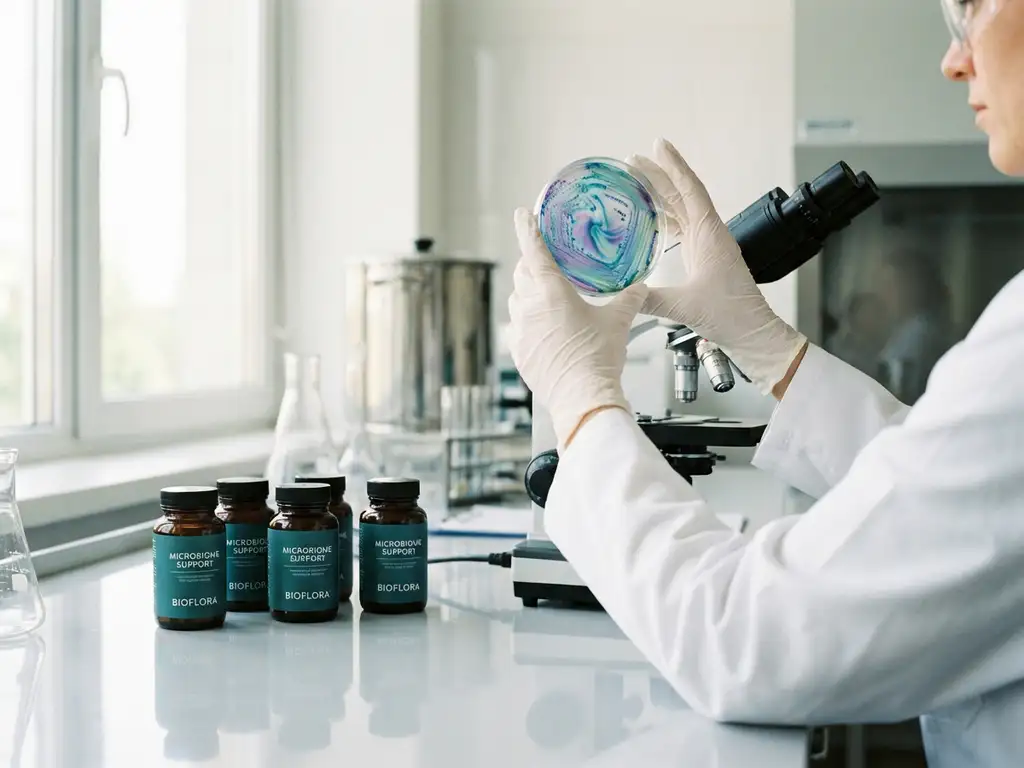
Nutraceutical companies use gut microbiome tests to evaluate how their functional foods, prebiotics, probiotics, and supplements interact with intestinal bacteria before undertaking costly clinical trials. These tests provide mechanistic insights into product efficacy, identify responder and non-responder profiles, and generate the regulatory evidence needed for health claims, while reducing the risk of expensive trial failures.
What are gut microbiome tests and why do nutraceutical companies need them?
Gut microbiome tests analyse how products interact with the complex bacterial ecosystem in the human intestine. These tests examine changes in microbial composition, metabolite production, and functional responses when exposed to functional ingredients, probiotics, or nutritional supplements.
Nutraceutical companies developing prebiotics, probiotics, and functional foods require this testing because each person’s gut microbiome is as unique as a fingerprint. This individual variation significantly contributes to clinical trial failure rates when products fail to show consistent effects across diverse populations. Traditional laboratory tests often miss the complexity of real gut environments, leading to promising early results that do not translate to human studies.
Testing provides crucial mechanistic evidence for patent protection and regulatory submissions to bodies such as EFSA and the FDA, and helps companies understand why their products work for some consumers but not others. This knowledge enables more targeted product development and reduces the substantial financial risks associated with failed clinical trials.
How do gut microbiome tests help reduce clinical trial failures?
Gut microbiome tests address the “Valley of Death” problem, in which products that show promise in basic laboratory studies fail in expensive clinical trials costing €500,000 to €5 million or more. These tests provide predictive insights that can mirror clinical outcomes within days, rather than the weeks required for human trials.
The core issue is that legacy preclinical models suffer from low predictive accuracy due to limited biorelevance and inadequate consideration of interindividual variation. Many traditional approaches use oversimplified conditions that do not accurately represent real gut environments, leading to misleading conclusions about product efficacy.
Advanced gut microbiome testing overcomes these limitations by maintaining the original microbial composition from sample collection through fermentation, preserving individual donor characteristics. This approach enables companies to identify responder and non-responder profiles before committing to expensive human studies. By testing across multiple donors representing different populations, companies can stratify responses and develop more targeted clinical trial designs, significantly reducing failure rates.
What types of gut microbiome tests do nutraceutical companies use?
Companies employ several testing approaches depending on their development stage and research questions. Ex vivo fermentation models use fresh human microbiota to simulate colonic fermentation under physiologically relevant conditions, providing the highest predictive accuracy for clinical outcomes.
In vitro digestion simulations model the upper gastrointestinal tract, examining how products survive stomach acid and digestive enzymes before reaching the colon. These tests are particularly valuable for probiotic survival studies and for assessing ingredient stability.
Microbiome composition analysis examines taxonomic changes, identifying which specific bacterial species are stimulated or inhibited by test products. For example, advanced testing can identify how ingredients stimulate key butyrate-producing bacteria such as Faecalibacterium prausnitzii or Anaerobutyricum hallii.
Metabolomic profiling measures the production of beneficial compounds such as short-chain fatty acids (SCFAs), particularly butyrate, propionate, and acetate, which are critical for colon health. Some platforms can even predict plasma metabolite levels from gut fermentation data.
How do companies validate their functional ingredients using microbiome testing?
Companies use gut microbiome testing to demonstrate mode of action by showing precisely how their ingredients modulate specific bacterial populations and metabolic pathways. This mechanistic evidence is essential for regulatory submissions and for substantiating health claims with authorities such as EFSA and the FDA.
The validation process involves establishing dose-response relationships across multiple concentrations to determine optimal efficacy levels. Testing typically includes a minimum of 6-8 different donors per cohort to ensure reliable statistical analysis and to capture patterns of interindividual variability.
Advanced testing can reveal complex interactions such as cross-feeding between bacterial species that lead to enhanced production of beneficial compounds. For instance, synbiotic combinations might stimulate specific bacteria such as Coprococcus catus, driving synergistic increases in butyrate production.
Companies also validate ingredients across different population groups, including healthy individuals versus those with specific conditions such as Type 2 diabetes, where microbiota responses can differ significantly. This population-specific data supports targeted product positioning and regulatory dossier preparation.
What should nutraceutical companies look for in microbiome testing services?
The most critical factor is predictive validity for clinical outcomes, proven through published validation studies that demonstrate a direct correlation between test results and human clinical trial data. Companies should seek providers with scientific publications supporting their methodology’s clinical relevance.
Reliable testing requires high-throughput capabilities to process multiple donors simultaneously, enabling proper statistical analysis and assessment of interindividual variability. The testing platform should maintain the original microbial composition throughout fermentation, demonstrated by running parallel no-substrate controls.
Population diversity is essential, with access to microbiome samples from various demographics, including different age groups, health states, and geographic regions. Some providers offer biobanking services with properly cryopreserved samples to bypass sourcing delays.
Technical capabilities should include comprehensive analysis covering microbial taxonomy and metabolomics, as well as the ability to couple with human cell models for host-microbiome interaction studies. The service should provide expert interpretation and actionable insights rather than raw data output, supporting informed decision-making for clinical trial design and regulatory submissions.
How Cryptobiotix helps with gut microbiome testing for nutraceuticals
Cryptobiotix addresses nutraceutical companies’ microbiome testing needs through our validated SIFR® technology, which provides predictive clinical insights within 1-2 days, compared with weeks of clinical testing. Our ex vivo platform maintains the original donor microbiome composition throughout fermentation, ensuring high biorelevance and clinical predictivity.
Our comprehensive testing services include:
- High-throughput screening across diverse population cohorts with a minimum of 6-8 donors per study
- Multi-omics analysis covering taxonomy, metabolomics, and host-microbiome interactions
- Integration with digestion models for complete gastrointestinal simulation
- Biobanking services with proprietary cryopreservation methods
- Regulatory-grade reporting for EFSA and FDA submissions
We serve companies across functional foods, pharmaceuticals, and biotechnology sectors, providing the mechanistic evidence needed to de-risk clinical trials and accelerate product development. Our validated platform bridges the gap between preclinical data and clinical outcomes, helping companies avoid the costly “Valley of Death” in product development.
Ready to validate your functional ingredients with predictive gut microbiome testing? Contact our team to discuss how SIFR® technology can support your product development and regulatory strategy.
Frequently Asked Questions
How long does gut microbiome testing typically take, and when should companies start testing in their product development timeline?
Gut microbiome testing with advanced platforms like SIFR® technology provides results within 1-2 days, making it ideal for early-stage screening. Companies should start testing during ingredient selection and formulation optimization, well before committing to clinical trials. This early testing helps identify the most promising candidates and optimal dosing before investing in expensive human studies.
What sample size is needed for reliable gut microbiome testing results?
A minimum of 6-8 different donors per cohort is required for reliable statistical analysis and to capture interindividual variability patterns. For more robust data supporting regulatory submissions, companies often test across 12-16 donors representing different demographics, health states, and geographic regions to ensure comprehensive population coverage.
Can gut microbiome testing predict which consumers will respond best to a product?
Yes, advanced microbiome testing can identify responder and non-responder profiles by analyzing how different individual microbiomes react to the same ingredient. This enables companies to develop personalized product recommendations and targeted marketing strategies, while also informing clinical trial participant selection to improve success rates.
What's the difference between testing individual ingredients versus finished products?
Testing individual ingredients helps understand specific mechanisms of action and optimal dosing, while finished product testing reveals how multiple ingredients interact within the gut environment. Many companies start with ingredient testing for formulation optimization, then validate the complete product to ensure synergistic effects and confirm that other ingredients don’t interfere with the primary active components.
How do regulatory authorities view gut microbiome testing data for health claims?
Regulatory bodies like EFSA and FDA increasingly recognize mechanistic microbiome data as valuable supporting evidence for health claims, particularly when it demonstrates clear mode of action and dose-response relationships. While human clinical trials remain the gold standard, robust microbiome testing data strengthens regulatory dossiers and can support novel health claim categories related to gut health and microbiome modulation.