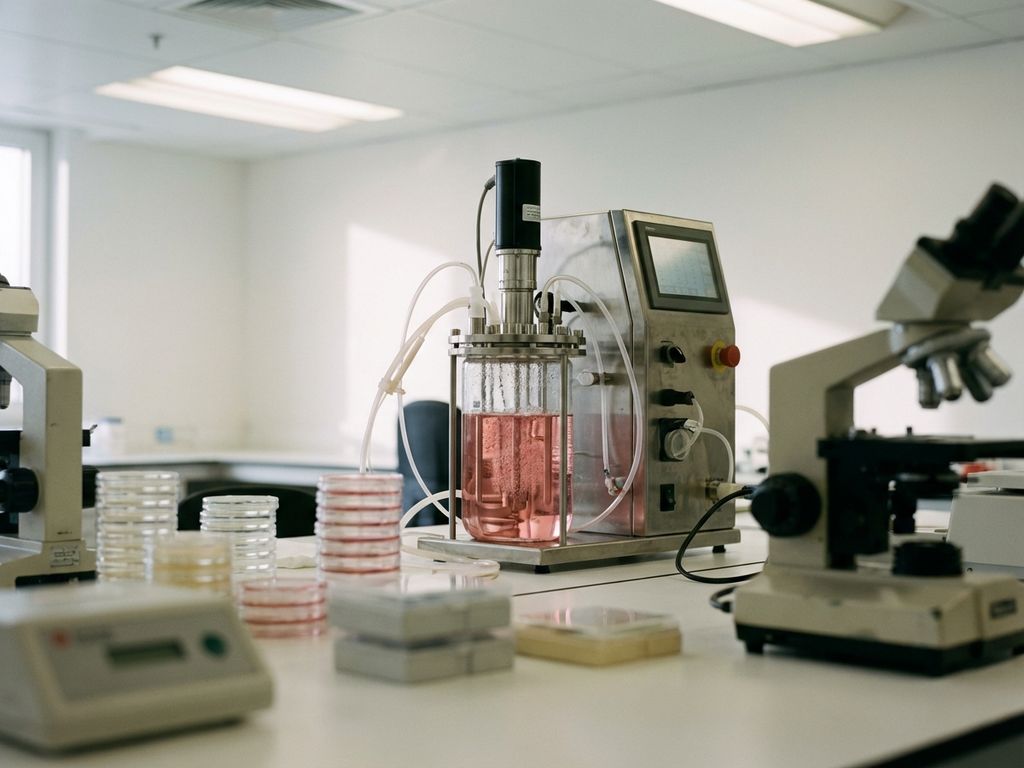
Bioreactor gut models are advanced laboratory systems that simulate human gastrointestinal conditions using controlled fermentation chambers. These ex vivo technologies replicate gut microbiome interactions with remarkable precision, offering faster and more predictive insights than traditional animal studies. They address critical limitations in conventional research methods while providing regulatory-grade data for product development and market authorisation.
What are bioreactor gut models and how do they work?
Bioreactor gut models are sophisticated ex vivo systems that recreate human gastrointestinal conditions in controlled laboratory environments. These automated platforms use fresh, unmodified human gut microbiota samples maintained in closed fermentation chambers that preserve the original microbial composition and individual donor characteristics.
The technology works by maintaining physiologically relevant conditions, including appropriate pH levels, oxygen-free environments, and precise nutrient availability. Advanced bioreactor systems can process over 1,000 individual fermentation chambers weekly, enabling comprehensive studies across multiple donors simultaneously. This high-throughput approach captures interindividual variation while maintaining the biorelevance necessary for clinically predictive outcomes.
Modern gut model platforms integrate seamlessly with digestion protocols, allowing researchers to study complex food matrices through complete gastrointestinal simulation. The closed-system design enables real-time monitoring of gas production, providing valuable insights into product tolerability and microbial metabolic activity.
What are the main limitations of traditional gut research methods?
Traditional gut research methods face significant constraints in predictivity, ethical considerations, and their ability to capture complex microbiome interactions. Animal models suffer from fundamental physiological differences, while conventional in vitro approaches often introduce substantial bias that compromises data reliability.
Animal studies present particular challenges because gut microbiomes vary dramatically across species in taxonomic composition, digestive physiology, transit times, and bile acid profiles. These differences make translating results to human outcomes problematic. Additionally, the 3R principle and modern regulatory frameworks like the FDA Modernization Act 2.0 actively promote non-animal approaches.
Traditional batch fermentation methods, while conceptually sound, have been undermined by flawed implementations using inadequate media and poor practices. These “quick and dirty” approaches allow fast-growing bacteria to dominate while important cross-feeding species disappear, producing unreliable data. Ex vivo testing typically costs 60–80% less than animal studies while delivering superior human relevance.
Cell culture models, though useful for specific mechanistic questions, cannot replicate the complex ecosystem interactions that define gut microbiome function under real physiological conditions.
How do bioreactor models compare to animal studies for gut research?
Bioreactor gut models offer superior predictive accuracy for human outcomes compared to animal studies because they use actual human microbiota under physiologically relevant conditions. This fundamental difference eliminates the species translation gap that limits the utility of animal models.
The ethical advantages are substantial. Bioreactor models align with modern regulatory movements promoting non-animal approaches, addressing growing concerns about animal welfare in research. They eliminate the ethical complexities associated with animal testing while providing more human-relevant data.
Timeline differences are remarkable. Animal studies typically require weeks or months to generate results, whereas advanced bioreactor systems can produce clinically predictive insights within 24–48 hours. This acceleration dramatically reduces development timelines and enables rapid iteration during product optimisation.
Cost-effectiveness strongly favours bioreactor approaches. Reduced infrastructure requirements, the elimination of animal housing and care costs, and higher throughput capabilities make bioreactor studies significantly more economical. The automation possible with bioreactor systems also reduces technical variability and manual errors common in animal studies.
Regulatory acceptance continues to grow as validation studies demonstrate correlation between bioreactor results and clinical outcomes, establishing these models as credible alternatives to animal testing.
What advantages do bioreactor gut models offer for regulatory submissions?
Bioreactor gut models provide exceptional advantages for regulatory submissions by generating mechanistic evidence that regulatory agencies increasingly demand. These systems produce reproducible, standardised data that supports robust dossiers for novel food applications, pharmaceutical submissions, and health claim substantiation.
The mechanistic insights generated through advanced bioreactor platforms address specific regulatory requirements for understanding how products work, not just demonstrating efficacy. Agencies like EFSA and the FDA require comprehensive mode-of-action evidence, which these models deliver through multi-omics analysis, including taxonomic profiling and metabolomics.
Reproducibility benefits are substantial because automated systems eliminate human error and ensure consistent protocols across studies. This standardisation is crucial for regulatory acceptance, as agencies require reliable, repeatable methodologies that can withstand scientific scrutiny.
The ability to assess interindividual variation using multiple donors (typically 6–8 per cohort) provides regulatory agencies with population-level insights essential for safety and efficacy assessments. This comprehensive approach addresses regulatory concerns about product performance across diverse populations.
Data quality standards meet regulatory expectations through validated protocols that maintain sample integrity from collection through analysis. The ex vivo nature of advanced bioreactor systems ensures that results reflect genuine biological responses rather than artificial laboratory conditions.
How Cryptobiotix advances bioreactor gut model research
We have revolutionised bioreactor gut model research through our proprietary SIFR® technology platform, which addresses traditional method limitations through validated ex vivo simulation and regulatory-grade data generation. Our approach combines unmatched throughput with clinical predictivity, bridging the gap between preclinical research and clinical outcomes.
Our SIFR® technology delivers comprehensive solutions, including:
- Validated ex vivo simulation that maintains original donor microbiome composition throughout fermentation
- High-throughput automation processing over 1,000 bioreactors weekly with enhanced reproducibility
- Multi-omics analysis providing taxonomic, metabolomic, and host–microbiome interaction insights
- Quantitative sequencing that eliminates bias from changes in bacterial cell density
- Integration with digestion models for comprehensive gastrointestinal simulation
- Gas production monitoring for tolerability assessment
Our platform generates mechanistic evidence suitable for patent protection, regulatory dossiers, and clinical trial de-risking. We serve multiple sectors, including food, pharmaceuticals, and biotechnology, through our comprehensive research applications. Our scientific publications demonstrate correlation between SIFR® results and clinical outcomes, establishing the technology’s predictive validity.
Ready to advance your product development with validated gut microbiome insights? Contact our team to discuss how SIFR® technology can support your regulatory submission and accelerate your path to market.
Frequently Asked Questions
How long does it take to set up and run a bioreactor gut model study?
Study setup typically takes 1-2 weeks for protocol development and donor recruitment, while the actual fermentation runs complete within 24-48 hours. Complete results including multi-omics analysis are usually available within 2-3 weeks from study initiation, making it significantly faster than traditional animal studies that can take months.
What sample size is needed for statistically meaningful results in bioreactor studies?
Most bioreactor gut model studies use 6-8 individual donors per cohort to capture interindividual variation and provide statistically robust data. This donor number balances cost-effectiveness with regulatory requirements for population-level insights, though specific sample sizes may vary based on study objectives and regulatory guidance.
Can bioreactor gut models predict side effects or safety issues before clinical trials?
Yes, bioreactor models excel at predicting tolerability issues through real-time gas production monitoring and metabolite analysis. They can identify potential digestive discomfort, bloating, or other GI-related side effects, allowing researchers to optimize formulations before expensive clinical trials and reduce the risk of adverse events in human studies.
What types of products are best suited for bioreactor gut model testing?
Bioreactor models are ideal for prebiotics, probiotics, functional foods, dietary supplements, pharmaceuticals targeting the gut, and novel food ingredients. They're particularly valuable for products that interact with gut microbiota or require mechanistic evidence for regulatory submissions, including those seeking health claims or novel food approvals.
How do you ensure the quality and representativeness of donor microbiota samples?
Donor samples undergo rigorous screening including health questionnaires, recent antibiotic use exclusion, and microbiome diversity assessments. Fresh, unmodified samples are processed immediately to preserve original microbial composition, and multiple donors are used per study to capture population-level variation and ensure results are representative of target demographics.
What regulatory agencies currently accept bioreactor gut model data for submissions?
Major agencies including the FDA, EFSA, Health Canada, and other international regulatory bodies increasingly accept bioreactor data, especially when supported by validation studies showing correlation with clinical outcomes. The FDA Modernization Act 2.0 specifically promotes non-animal approaches, making bioreactor models particularly valuable for regulatory strategies.
How do costs compare between bioreactor studies and traditional animal studies for gut research?
Bioreactor studies typically cost 60-80% less than equivalent animal studies due to eliminated housing costs, reduced infrastructure requirements, and higher throughput capabilities. The faster turnaround time also reduces overall project costs and enables rapid iteration during product development, providing better return on research investment.