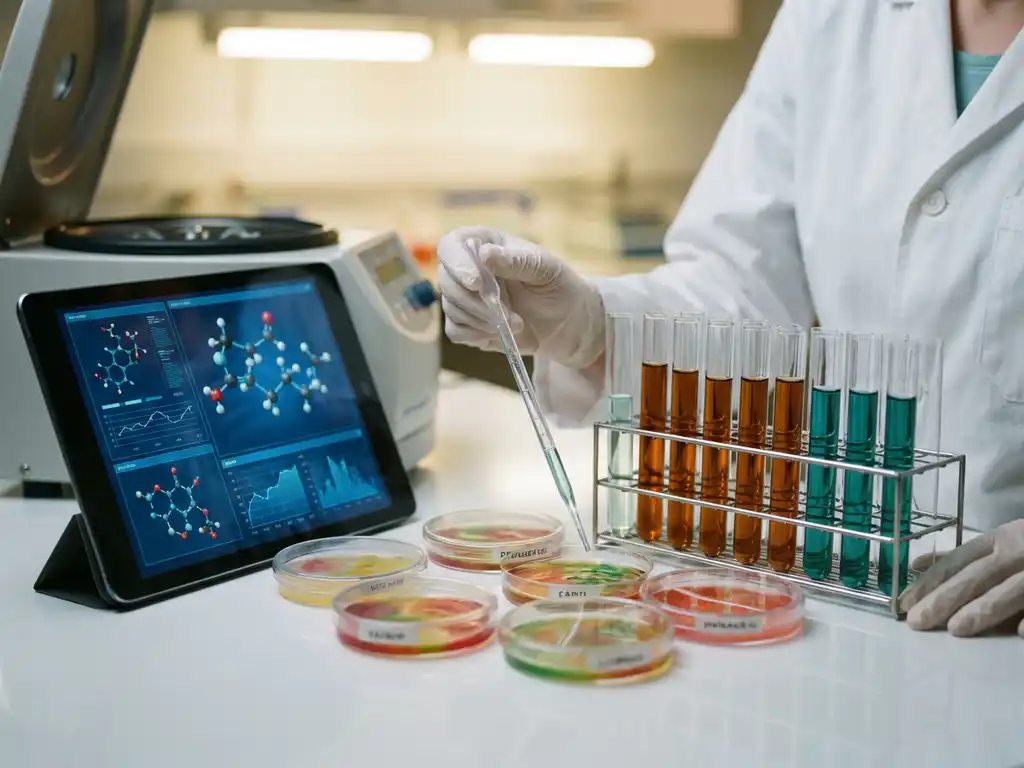
Researchers use gut microbiome tests to evaluate how drugs interact with the trillions of bacteria in our digestive system. These tests analyse microbial composition, metabolite production, and host responses to predict drug efficacy and safety before costly clinical trials. Modern pharmaceutical companies increasingly rely on advanced gut simulation technologies to identify promising compounds, understand inter-individual variability, and develop personalised therapeutic approaches.
What are gut microbiome tests and why do they matter in drug development?
Gut microbiome tests analyse the complex bacterial ecosystem in our digestive tract to understand how drugs interact with these microorganisms. These tests examine microbial composition, metabolite production, and functional changes that occur when pharmaceutical compounds encounter gut bacteria.
The importance of these tests in drug development stems from growing recognition that the gut microbiome significantly influences drug metabolism, efficacy, and safety. Many therapeutic compounds are metabolised by gut bacteria before reaching their target sites, whilst others directly modulate microbial communities to achieve therapeutic effects. Pharmaceutical companies now understand that drug–microbiome interactions can determine whether a treatment succeeds or fails in clinical trials.
These tests enable researchers to identify potential safety concerns early, optimise dosing strategies, and predict which patient populations will respond best to specific treatments. This approach helps pharmaceutical companies make informed decisions about which compounds to advance through expensive clinical development programmes.
How do researchers screen potential drugs using microbiome analysis?
Researchers use ex vivo gut simulation methods to screen potential drugs by exposing human gut microbiota samples to test compounds and measuring the resulting changes. This process typically involves collecting fresh faecal samples from multiple donors, incubating them with candidate drugs under controlled conditions, and analysing microbial and metabolic responses within 24–48 hours.
The screening process begins with biomarker identification, where researchers measure changes in microbial composition, metabolite production, and functional pathways. Advanced technologies can process over 1,000 samples per week, enabling high-throughput evaluation of multiple compounds simultaneously. This approach allows researchers to test different doses, formulations, and patient populations in parallel.
Key screening parameters include short-chain fatty acid production, gas generation for tolerability assessment, and changes in beneficial versus potentially harmful bacterial populations. Researchers also examine how drugs affect microbial diversity and stability, providing insights into potential therapeutic mechanisms and safety profiles.
What’s the difference between traditional drug testing and microbiome-based approaches?
Traditional drug testing relies primarily on animal models and cell culture systems that often fail to accurately represent the complexity of the human gut microbiome. Animal microbiomes differ significantly from human microbiomes in taxonomic composition, digestive physiology, and metabolic processes, leading to poor translation of results to human clinical outcomes.
Microbiome-based approaches use human gut bacteria samples to create more physiologically relevant testing environments. These methods maintain the original microbial composition and individual donor characteristics, providing higher predictive accuracy for clinical outcomes. Ex vivo testing is typically 60–80% less expensive than animal studies whilst delivering more clinically relevant data.
The key advantage lies in addressing inter-individual variability. Traditional models use genetically similar laboratory animals, whilst microbiome-based approaches can evaluate responses across diverse human populations. This capability helps identify responder versus non-responder populations before committing to expensive clinical trials, significantly reducing development risks and costs.
Why do some promising drugs fail in clinical trials despite positive lab results?
The “Valley of Death” between preclinical and clinical research occurs because traditional laboratory models fail to capture the complexity of human gut microbiome interactions. Standard lab conditions use artificially controlled environments that do not replicate the harsh, dynamic conditions of the human digestive system.
Inter-individual microbiome variability represents a major challenge that simple lab models cannot address. Each person’s gut microbiome is unique, like a fingerprint, leading to dramatically different responses to the same therapeutic intervention. When preclinical models use only one or two standardised conditions, they miss this crucial variability that determines real-world treatment outcomes.
Traditional models also suffer from low biorelevance, failing to maintain the original microbial composition and functional characteristics found in human gut environments. This disconnect means promising lab results often do not translate to clinical success, resulting in expensive trial failures that can cost pharmaceutical companies millions of euros.
How do pharmaceutical companies use microbiome data for personalised medicine?
Pharmaceutical companies analyse microbiome data to identify distinct patient populations that respond differently to treatments, enabling the development of targeted therapeutic strategies. This approach involves studying microbial composition patterns, metabolic profiles, and functional pathways that correlate with treatment responses.
The process begins with responder versus non-responder identification, where researchers analyse microbiome characteristics that predict treatment success. Companies can then develop companion diagnostics that identify patients most likely to benefit from specific therapies, improving clinical trial success rates and post-market effectiveness.
Biomarker discovery focuses on identifying specific bacterial species, metabolites, or functional pathways that serve as predictive indicators. This information supports patient stratification strategies, helping companies design more targeted clinical trials and develop personalised dosing recommendations. The approach also enables the development of microbiome-modulating interventions that can enhance drug efficacy in previously non-responsive patient populations.
How Cryptobiotix helps with gut microbiome testing for drug development
Cryptobiotix addresses pharmaceutical research challenges through our validated SIFR® technology, which provides predictive ex vivo gut simulation for drug development. Our approach bridges the Valley of Death between preclinical and clinical research by maintaining the original donor microbiome composition throughout testing, ensuring high biorelevance and clinical predictivity.
Our comprehensive pharmaceutical research services include:
- High-throughput screening of drug candidates across diverse human populations
- Mechanistic analysis of drug–microbiome interactions through multi-omics approaches
- Responder versus non-responder identification for personalised medicine development
- Safety assessment through tolerability biomarkers and metabolic profiling
- Host–microbiome interaction modelling using coupled cell culture systems
Our validated technology generates clinically predictive data within days rather than weeks, enabling faster decision-making and reduced development costs. We support pharmaceutical companies from early R&D screening through regulatory dossier preparation, providing the scientific evidence needed to advance promising therapeutics with confidence.
Ready to de-risk your pharmaceutical development programme? Contact our team to discuss how SIFR® technology can accelerate your drug development timeline whilst improving clinical translation success.
Frequently Asked Questions
How long does it typically take to get results from gut microbiome drug screening tests?
Ex vivo gut microbiome screening typically delivers results within 24-48 hours for initial assessments, with comprehensive analysis completed within days rather than weeks. This rapid turnaround allows pharmaceutical companies to make faster go/no-go decisions compared to traditional animal studies that can take months to complete.
What sample size is needed to get reliable data for drug-microbiome interaction studies?
Most studies require samples from at least 10-20 diverse donors to capture meaningful inter-individual variability, though this can vary based on the research question. For robust population-level insights and responder identification, pharmaceutical companies often test 50-100 donor samples to ensure statistical power and represent diverse microbiome profiles.
Can microbiome testing predict drug side effects before clinical trials?
Yes, microbiome testing can identify potential safety signals by measuring tolerability biomarkers like gas production, inflammatory markers, and changes in beneficial bacterial populations. While not replacing traditional safety studies, these tests provide early warning signs of gastrointestinal side effects and help optimise dosing strategies to minimise adverse reactions.
What happens if a drug shows different effects across various donor microbiomes?
Variable responses across donor microbiomes actually provide valuable insights for developing personalised medicine strategies. Researchers analyse these differences to identify specific microbial biomarkers that predict responders versus non-responders, enabling patient stratification and the development of companion diagnostics for more targeted treatments.
How do companies integrate microbiome data with other preclinical testing methods?
Microbiome data complements traditional preclinical methods by providing the missing human gut context that animal models cannot replicate. Companies typically use microbiome testing alongside pharmacokinetic studies, toxicology assessments, and cell culture work to create a more complete picture of drug behaviour before advancing to clinical trials.