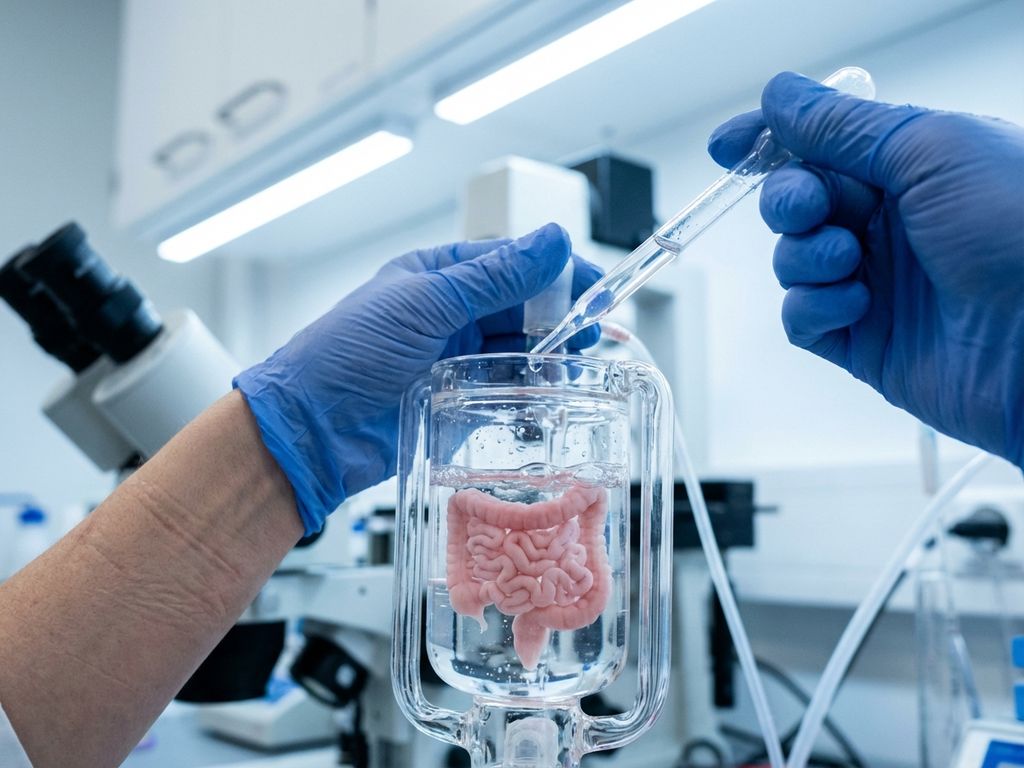
Gut models are laboratory systems that replicate human gastrointestinal conditions to test how drugs interact with the gut microbiome before human trials. These ex vivo technologies bridge the gap between preclinical research and clinical outcomes by simulating digestion, fermentation, and host interactions under physiologically relevant conditions. They help researchers understand drug safety, efficacy, and mechanisms of action while addressing the “Valley of Death,” where promising laboratory results often fail to translate into successful clinical trials.
What are gut models and why do researchers use them for drug testing?
Gut models are sophisticated laboratory systems that simulate human gastrointestinal conditions to evaluate how pharmaceutical compounds interact with the gut microbiome. These models replicate the complex environment of the human digestive tract, including pH levels, oxygen conditions, and microbial communities.
Researchers use gut models because traditional laboratory testing often fails to predict real-world effectiveness. Standard lab conditions use sterile environments with optimal pH and abundant nutrients, while the human gut presents harsh conditions including stomach acid (pH 1.5–2.0), bile salts, digestive enzymes, and competition from trillions of established bacteria.
These models serve as crucial tools for understanding drug–microbiome interactions before expensive human trials. They help identify how therapeutic compounds affect microbial composition, metabolite production, and gut barrier integrity. By testing multiple donor samples, researchers can assess individual variability and predict population responses, ultimately reducing the risk of clinical trial failures.
How do ex vivo gut models simulate real human digestive conditions?
Ex vivo gut models maintain fresh, unmodified human microbiota samples throughout testing, preserving their original complexity and individual characteristics as if they were living tissue biopsies. This approach ensures maximum biorelevance compared with artificial laboratory conditions.
These systems replicate key physiological parameters, including appropriate pH levels, oxygen gradients, nutrient availability, and temperature conditions. The technology uses automated bioreactors that control fermentation environments while measuring gas production, metabolite formation, and microbial composition changes over 24–48 hours.
Unlike traditional approaches that adapt or culture microbiomes over extended periods, validated ex vivo models demonstrate that microbiome modulation occurs immediately within hours of exposure. This immediate response represents the foundational microbial event that drives long-term clinical outcomes observed in multi-week human studies. The models can simulate different gut regions and accommodate diverse populations, including infants, adults, older individuals, and various disease states.
What types of drugs and compounds can be tested using gut models?
Gut models can evaluate a wide range of pharmaceutical categories, including probiotics, prebiotics, therapeutic compounds, novel food ingredients, and active pharmaceutical ingredients (APIs). These systems are particularly valuable for testing compounds that target gastrointestinal conditions or rely on gut microbiome interactions for their mechanism of action.
The models accommodate different drug formulations, from whole foods to specific bioactive ingredients. They can assess how various delivery systems interact with gut bacteria, including encapsulated probiotics, sustained-release formulations, and targeted therapeutic compounds. This versatility makes them suitable across multiple industries, including food technology, nutraceuticals, and pharmaceuticals.
Researchers can test novel ingredients requiring regulatory approval, first-in-class therapeutics, and combination products. The models are especially useful for investigating compounds where traditional animal testing provides limited translational value due to fundamental differences between animal and human gut microbiomes, including variations in transit times, pH levels, and bile acid compositions.
How do gut models help researchers understand drug safety and efficacy?
Gut models provide comprehensive safety assessment capabilities through toxicity screening, dose–response relationship analysis, and early identification of potential adverse effects. They measure gas production as a reliable proxy for tolerability, helping predict gastrointestinal side effects before human exposure.
For efficacy evaluation, these models generate mechanistic insights through multi-omics analysis, including taxonomy, metabolomics, and host–microbiome interaction studies. Researchers can measure biomarker production, assess gut barrier integrity, and evaluate immune system responses using coupled cell culture systems.
The models excel at predicting individual variability by testing multiple donor samples (a minimum of 6–8 donors per cohort) to identify responders versus non-responders. This population-level analysis helps researchers understand why certain individuals may not respond to treatment and enables the development of personalised therapeutic approaches. The technology can also predict plasma metabolites and other systemic effects, providing insights into how local gut changes translate to whole-body outcomes.
What regulatory advantages do validated gut models provide for drug development?
Validated gut models provide crucial mechanistic evidence that regulatory agencies like EFSA and FDA increasingly demand for product approvals. These models generate data explaining how products work, not just that they work, addressing regulatory requirements for robust mode-of-action evidence in novel food applications, GRAS notifications, and pharmaceutical submissions.
The models support regulatory dossier development by providing predictive, validated data that correlate with clinical outcomes. Published validation studies demonstrate direct correlation between model results and human clinical trial outcomes, giving regulatory reviewers confidence in the preclinical evidence package.
For novel ingredients and first-in-class therapeutics, gut models help navigate regulatory pathways with limited precedent by providing comprehensive safety and mechanism data. They enable researchers to respond effectively to regulatory questions and deficiency letters by generating targeted follow-up studies that directly address specific agency concerns. The rapid turnaround time (days to weeks) allows companies to meet tight submission deadlines while maintaining the data quality standards required for regulatory acceptance.
How Cryptobiotix helps with advanced gut model drug testing
Cryptobiotix provides validated gut model testing through our proprietary SIFR® technology, which delivers clinically predictive insights for pharmaceutical development within 1–2 days. Our ex vivo platform has been extensively validated to predict clinical outcomes across taxonomy, metabolomics, and tolerability parameters.
Our comprehensive services for drug development include:
- Mechanistic mode-of-action studies for regulatory submissions
- Safety assessment, including toxicity screening and dose–response analysis
- Individual variability assessment across diverse population cohorts
- Host–microbiome interaction modelling using coupled cell culture systems
- High-throughput screening for early-stage compound evaluation
- Regulatory-grade reporting suitable for EFSA, FDA, and Health Canada submissions
Our validated approach addresses the critical gap between preclinical research and clinical success, helping you build robust regulatory dossiers with confidence. We support companies across the entire development pipeline, from early R&D screening to comprehensive characterisation for clinical trial preparation. Contact our team to discuss how SIFR® technology can accelerate your drug development programme with predictive, regulatory-grade preclinical data.
Frequently Asked Questions
How long does it typically take to get results from gut model testing, and what factors affect the timeline?
Most gut model studies using validated ex vivo platforms like SIFR® technology deliver results within 1-2 days for basic screening, with comprehensive mechanistic studies taking 1-2 weeks. Timeline factors include the number of donor samples tested (minimum 6-8 recommended), complexity of analysis required (basic taxonomy vs. full multi-omics), and whether additional host-microbiome interaction studies are needed.
What sample size and donor diversity should I plan for to get statistically meaningful results?
A minimum of 6-8 diverse donor samples per cohort is recommended to capture individual variability and identify responder vs. non-responder patterns. For regulatory submissions, 10-12 donors across different demographics (age, geography, health status) provides more robust population-level insights. Consider including donors representing your target patient population for maximum clinical relevance.
How do I prepare my compound or formulation for gut model testing?
Compounds should be provided in their intended final formulation when possible, including encapsulation, coating, or delivery system. Provide 3-5 different concentrations spanning your expected therapeutic range, plus vehicle controls. Include detailed formulation information, stability data, and any special handling requirements (light sensitivity, temperature storage) to ensure accurate testing conditions.
What are the most common reasons gut model results don't translate to clinical trials, and how can I avoid them?
The main translation failures occur when testing conditions don't match real-world usage (wrong pH, unrealistic concentrations, or inappropriate donor populations) or when follow-up clinical studies use different endpoints than the preclinical model. Ensure your gut model testing uses clinically relevant doses, appropriate donor demographics, and measures the same biomarkers you plan to track in human trials.
Can gut models predict drug-drug interactions or interactions with common medications?
Yes, gut models can assess how your compound interacts with commonly prescribed medications that affect gut microbiome composition, such as antibiotics, proton pump inhibitors, or metformin. Testing should include co-exposure studies with relevant medications and assessment of how pre-existing microbiome alterations (from chronic medication use) affect your compound's efficacy.
What specific data packages do regulatory agencies expect from gut model studies?
Regulatory agencies typically require mechanistic mode-of-action data, dose-response relationships, safety/tolerability evidence, and population variability assessment. Include detailed methodology validation, quality control measures, statistical analysis plans, and direct correlation studies with published clinical data when available. EFSA and FDA particularly value multi-omics approaches that explain both microbial changes and downstream metabolic effects.
How do I interpret and act on gut model results that show high individual variability?
High variability often indicates the need for personalized approaches or biomarker-guided patient selection. Analyze responder vs. non-responder profiles to identify baseline microbiome characteristics that predict treatment success. Consider developing companion diagnostics, adjusting inclusion criteria for clinical trials, or exploring combination approaches to improve response rates across diverse populations.