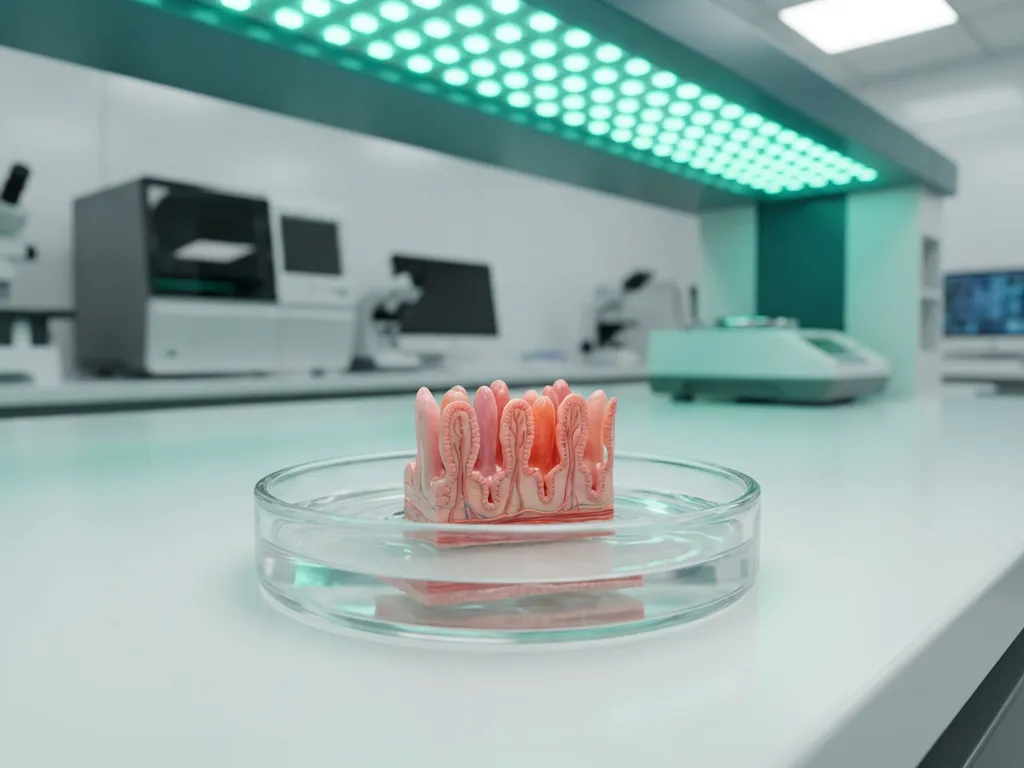
Ex vivo testing simulates human gut conditions by maintaining live microbiome samples outside the body under physiologically relevant conditions. This approach preserves the original microbial community structure and function, creating a biologically accurate environment that mirrors the complex interactions found in the human digestive system. Unlike traditional laboratory methods, ex vivo testing bridges the gap between simplified lab studies and expensive clinical trials.
What is ex vivo testing, and how does it differ from other gut research methods?
Ex vivo testing uses fresh, unmodified human gut microbiota samples maintained under controlled conditions that preserve their original complexity and individual characteristics. This “living outside the body” approach maintains the microbiome composition from collection through fermentation, typically lasting 24–48 hours, as if working with a living biopsy.
The key distinction lies in biological relevance. In vitro methods use artificially controlled conditions with sterile environments, optimal pH levels, and abundant nutrients that do not reflect real gut conditions. In vivo animal studies face fundamental limitations due to differences in taxonomic composition, digestive physiology, gut transit times, and metabolic processes compared with humans, leading to results that do not translate.
Ex vivo testing addresses the “Valley of Death” in microbiome research: the poor translation between promising preclinical findings and clinical outcomes. Traditional models exhibit low biological relevance and limited consideration of inter-individual variation, whereas ex vivo approaches provide predictive insights that correlate with human clinical trial results.
How does ex vivo testing recreate the complex environment of the human gut?
Ex vivo systems simulate the harsh, dynamic gut environment by maintaining appropriate pH gradients, oxygen levels, nutrient availability, and microbial diversity that mirror real physiological conditions. These systems preserve the original donor microbiome characteristics throughout the testing period.
The human gut presents multiple survival challenges, including stomach acid (pH 1.5–2.0), bile salts, digestive enzymes, and intense competition from trillions of established bacteria. Ex vivo platforms recreate these conditions by maintaining physiological parameters that reflect the actual gut environment rather than artificially optimal laboratory settings.
This approach captures host–microbiome interactions through integrated cell models that investigate downstream effects on gut wall integrity, immune responses, and metabolic markers. The technology maintains individual donor characteristics, enabling researchers to study how different microbiome compositions respond to interventions under biologically relevant conditions.
What makes ex vivo gut simulation predictive of clinical outcomes?
Ex vivo gut simulation achieves predictive accuracy through validation studies demonstrating a direct correlation between model results and human clinical trial outcomes. The technology must prove its ability to maintain the original microbiome composition throughout testing, confirmed by parallel no-substrate controls.
The foundation of predictive accuracy lies in preserving microbial community structure. A truly ex vivo model maintains both starting and endpoint microbiome compositions without product intervention, demonstrating community stability. This preservation of individual donor characteristics enables the model to generate data that accurately forecast clinical responses.
This predictive capability addresses the critical challenge that traditional preclinical models often fail to predict human responses, leading to costly clinical trial failures. Ex vivo testing provides mechanistic insights into mode of action, dose–response relationships, and inter-individual variability that support informed decision-making in product development and regulatory submissions.
How long does ex vivo testing take compared to traditional research methods?
Ex vivo testing delivers results within 1–2 days, dramatically faster than traditional research approaches. This rapid timeline provides immediate microbial response data that can predict clinical outcomes that require weeks of repeated intervention in human studies.
The timeline comparison reveals significant efficiency advantages: ex vivo studies are completed within days, animal studies require weeks to months, and human clinical trials extend over months to years. The high-throughput capabilities enable processing of over 1,000 bioreactors per week, allowing parallel testing of multiple conditions, doses, and populations simultaneously.
This speed advantage stems from capturing immediate microbiome effects rather than waiting for progressive health outcomes. Gut bacteria respond to interventions within hours, altering metabolism and composition. Ex vivo testing captures this foundational microbial event that drives long-term clinical benefits, providing predictive insights without extended study periods.
What types of gut conditions and populations can ex vivo testing simulate?
Ex vivo testing can simulate diverse microbiome populations, including healthy adults, older adults, infants, and various disease states. The technology also adapts to animal microbiomes for veterinary and agricultural applications, supporting research across multiple species and health conditions.
Population diversity enables personalised medicine applications through stratification studies. A minimum of 6–8 different donors per cohort ensures reliable statistical analysis and provides insights into inter-individual responses, identifying responder versus non-responder profiles that are crucial for clinical translation.
Disease-specific applications include inflammatory bowel disease, metabolic disorders, and age-related microbiome changes. For animal health, the platform accommodates poultry caecal content, swine mid-colonic sections, and companion animal samples, requiring adapted incubation temperatures, media compositions, and protocols specific to each species’ physiological requirements.
How Cryptobiotix helps with ex vivo gut microbiome simulation
Cryptobiotix provides comprehensive ex vivo gut microbiome simulation through our proprietary SIFR® technology platform, delivering validated preclinical insights that predict clinical outcomes. Our automated systems combine high throughput with exceptional biological relevance, processing multiple conditions simultaneously while maintaining individual donor characteristics.
Our services include:
- SIFR® Prism Mode – Comprehensive studies with robust statistical analysis and mode-of-action insights
- SIFR® Screening Mode – High-throughput early discovery testing for over 100 conditions simultaneously
- Multi-omics analysis – Taxonomic, metabolomic, and host–microbiome interaction assessments
- Biobanking solutions – Proprietary cryopreservation methods that maintain sample integrity
- Regulatory support – Data packages supporting submissions to EFSA, FDA, and other agencies
We serve food, pharmaceutical, and biotechnology industries with peer-reviewed validation studies demonstrating correlation between our ex vivo results and clinical trial outcomes. Contact our team to discuss how SIFR® technology can de-risk your product development and accelerate your path to market success.
Frequently Asked Questions
How do I know if ex vivo testing is right for my product development stage?
Ex vivo testing is ideal for early-stage product development when you need rapid, cost-effective screening of multiple formulations or doses before committing to expensive clinical trials. It's particularly valuable if you're developing probiotics, prebiotics, or functional foods where understanding microbiome interactions is crucial for regulatory submissions and market positioning.
What sample size and donor diversity do I need for statistically meaningful results?
A minimum of 6-8 donors per cohort is required for reliable statistical analysis, though 10-12 donors provide more robust data for regulatory submissions. Consider your target population's diversity - if developing products for specific age groups or health conditions, ensure your donor pool reflects these characteristics to capture relevant inter-individual variability.
Can ex vivo results replace the need for human clinical trials entirely?
No, ex vivo testing cannot replace clinical trials but serves as a powerful predictive tool to de-risk and optimize your clinical strategy. It helps identify the most promising formulations, optimal dosing, and likely responder populations before entering costly human studies, significantly improving your chances of clinical success.
What happens if my product shows negative effects in ex vivo testing?
Negative ex vivo results provide valuable early warnings that can save significant time and resources. You can reformulate your product, adjust dosing, or pivot your approach before investing in clinical trials. The detailed mechanistic data helps identify specific issues, whether it's disrupting beneficial bacteria or failing to produce desired metabolites.
How should I prepare my samples and what controls do I need for accurate results?
Work with your ex vivo testing provider to determine optimal sample preparation, as requirements vary by product type (liquid, powder, encapsulated). Essential controls include vehicle-only treatments, positive controls with known effects, and no-treatment controls to demonstrate microbiome stability throughout the testing period.