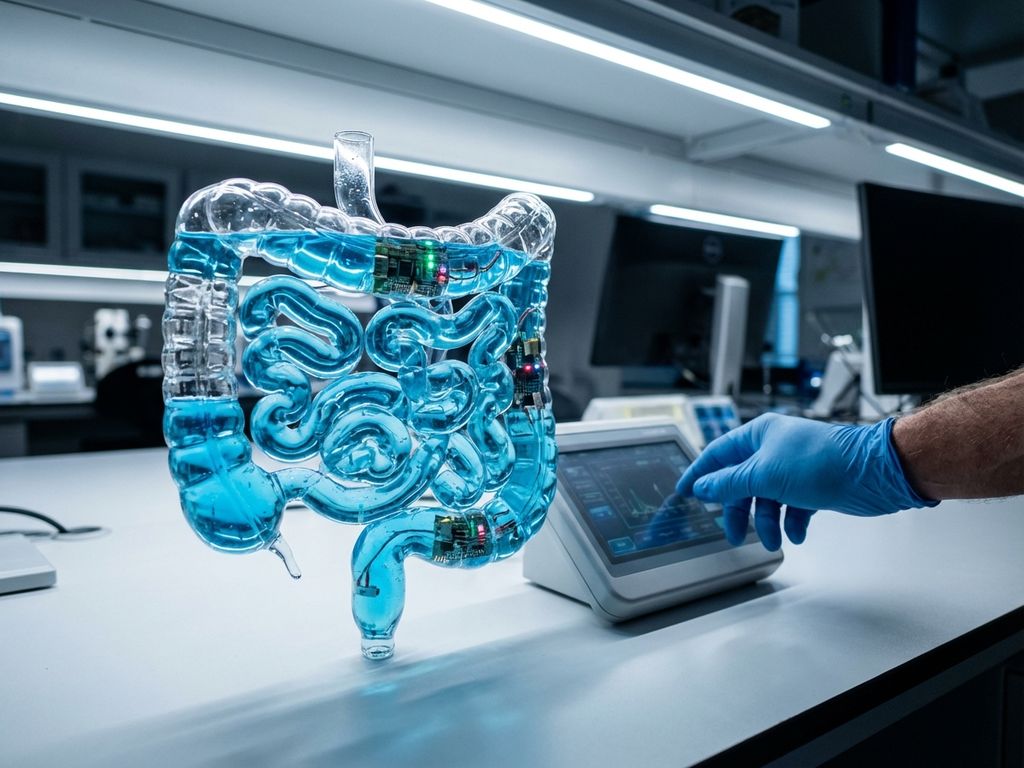
The future of gut model technology promises transformative advances that will address current limitations and establish new standards for preclinical research. Emerging developments include artificial intelligence integration, personalised medicine applications, enhanced regulatory frameworks, and breakthrough technologies for gut–host interaction modelling. These innovations will bridge the gap between preclinical data and clinical outcomes, making gut microbiome research more predictive and reliable.
What are the current limitations of existing gut model technologies?
Existing gut model technologies face significant challenges, including poor standardisation, limited representation of inter-individual variability, and inadequate throughput capabilities. These limitations create what researchers call the “Valley of Death” between preclinical findings and clinical success.
Traditional preclinical models suffer from low biorelevance because they fail to maintain the original microbial composition throughout testing. Many legacy systems use adapted or cultured microbiomes instead of fresh samples, creating pronounced selection bias that makes results non-translatable to human outcomes. Animal models present additional challenges, as animal microbiomes differ fundamentally from human microbiomes in taxonomic composition, digestive physiology, and metabolic processes.
Throughput limitations restrict researchers to testing only one to three parallel gut microbiota samples, which cannot capture the variability needed for reliable statistical analysis. This constraint prevents proper assessment of responder versus non-responder populations, limiting the development of targeted interventions. Additionally, many existing technologies lack robust validation studies demonstrating correlation between model results and human clinical trial outcomes.
How will artificial intelligence transform gut microbiome research models?
Artificial intelligence will revolutionise gut model technology through advanced pattern recognition, predictive modelling capabilities, and automated analysis systems. AI algorithms will enhance precision in simulating individual gut responses and accelerate data interpretation across complex multi-omics datasets.
Machine learning applications will enable researchers to identify subtle patterns in microbiome data that traditional analysis methods miss. These systems will process vast amounts of taxonomic and metabolomic information simultaneously, revealing previously unknown relationships between microbial communities and host responses. Predictive algorithms will forecast clinical outcomes with greater accuracy by integrating multiple data layers, including microbial composition, metabolite production, and host biomarkers.
Automated analysis systems will streamline the interpretation of fermentation data, reducing analysis time from weeks to days. AI-powered platforms will standardise data processing protocols, minimising human error and improving reproducibility across different research facilities. These advances will enable high-throughput screening of thousands of conditions while maintaining analytical depth and precision.
What role will personalised medicine play in future gut model development?
Personalised medicine will drive the development of individualised microbiome profiling systems and patient-specific model creation. Future gut models will simulate diverse population characteristics, enabling precision nutrition applications and tailored therapeutic development strategies based on individual microbiome signatures.
Advanced gut models will incorporate demographic variables such as age, geography, diet, and disease states to create representative cohorts for specific target populations. This approach will enable researchers to predict how different individuals might respond to the same intervention, supporting the development of personalised nutrition and therapeutic strategies. Cohort stratification will become standard practice, with minimum requirements of six to eight different donors per study to capture meaningful inter-individual variability.
Patient-specific modelling will allow researchers to test interventions on microbiomes from individuals with particular health conditions or genetic backgrounds. This capability will accelerate the development of targeted probiotics, prebiotics, and pharmaceutical interventions designed for specific patient populations, ultimately improving clinical success rates and reducing development costs.
How will regulatory acceptance of ex vivo gut models evolve?
Regulatory frameworks will increasingly accept ex vivo gut simulation data as agencies recognise the limitations of animal models and demand more human-relevant preclinical evidence. Standardised validation protocols and integration with clinical trial design will become mandatory requirements for regulatory submissions.
The FDA Modernization Act 2.0 and EU Directive 2010/63/EU already promote non-animal approaches, creating regulatory momentum for validated ex vivo technologies. Agencies will establish specific criteria for accepting gut model data, including requirements for clinical predictivity validation through published studies demonstrating correlation with human trial outcomes. Proper documentation of model biorelevance, including preservation of original donor microbiome composition, will become essential.
Integration with clinical trial design will streamline drug development timelines by providing mechanistic evidence that supports regulatory dossiers. Ex vivo data will complement clinical efficacy results for submissions to EFSA, FDA, and Health Canada, particularly for novel foods, probiotics, and pharmaceutical applications targeting the gut microbiome.
What emerging technologies will enhance gut–host interaction modelling?
Breakthrough technologies, including organ-on-chip systems, 3D tissue modelling, and real-time metabolite monitoring, will dramatically improve simulation of gut–host interactions. Multi-organ system integration will enable comprehensive assessment of how gut microbiome changes affect systemic health outcomes.
Advanced cell culture systems will couple fermentation models with human cell lines to investigate downstream effects on gut barrier integrity, immune responses, and metabolic markers such as GLP-1 production. These integrated approaches will provide mechanistic insights into how test substances modulate the gut microbiota and subsequently impact host health. Real-time monitoring capabilities will track metabolite production and microbial composition changes throughout fermentation processes.
Multi-organ platforms will simulate the complex interactions between the gut microbiome and other organ systems, enabling researchers to predict systemic effects of gut-targeted interventions. These technologies will incorporate physiologically relevant conditions, including appropriate pH levels, oxygen gradients, and nutrient availability, to maintain high biorelevance throughout testing.
How Cryptobiotix advances next-generation gut model technology
We address current limitations through our validated SIFR® technology platform, which combines ex vivo biorelevance with high-throughput capabilities and regulatory-grade data generation. Our approach bridges the Valley of Death between preclinical research and clinical outcomes by maintaining original donor microbiome composition throughout fermentation.
Our SIFR® technology offers several key advantages:
- Validated clinical predictivity – Documented correlation with human trial outcomes across taxonomy, metabolomics, and tolerability parameters
- High-throughput automation – Processing more than 1,000 bioreactors per week with enhanced reproducibility
- Multi-omics analysis – Proprietary pipeline providing mechanistic insights for IP generation and regulatory submissions
- Biobanking innovations – Proprietary cryopreservation methods that preserve both the structure and function of microbiome samples
- Modular design – Comprehensive gastrointestinal simulation from digestion through host–microbiome interactions
Our platform generates scientific publications that support regulatory dossiers and clinical development strategies. We serve multiple sectors through our comprehensive applications across the food, pharmaceutical, and biotechnology industries. To learn how our validated SIFR® technology can advance your product development, contact our team for a consultation on your specific research needs.
Frequently Asked Questions
How long will it take for AI-powered gut models to become commercially available?
AI-integrated gut model platforms are already emerging, with several companies developing machine learning capabilities for microbiome analysis. Full commercial deployment of comprehensive AI-powered systems is expected within 2-3 years, though early-stage AI tools for data analysis are available now. The timeline depends on regulatory validation requirements and the development of standardised AI protocols for microbiome research.
What specific validation studies are required to gain regulatory acceptance for ex vivo gut models?
Regulatory agencies typically require clinical predictivity studies demonstrating correlation between model results and human trial outcomes across multiple endpoints. Key validation requirements include taxonomic composition preservation studies, metabolomic correlation analysis, and side-by-side comparisons with clinical data from at least 3-5 published human trials. Documentation must show statistical significance in predicting both efficacy and safety outcomes.
How many donor samples are needed to achieve statistically meaningful results in personalised gut modelling?
Current best practices recommend a minimum of 6-8 different donor samples per study to capture meaningful inter-individual variability, though this number may increase to 12-15 donors for more robust statistical power. The exact number depends on your research question, target population characteristics, and the degree of variability expected. Stratification by demographics, health status, or genetic markers may require additional donors per subgroup.
What are the main technical challenges in integrating organ-on-chip systems with gut microbiome models?
The primary challenges include maintaining sterility while preserving anaerobic conditions for microbiome cultures, synchronising different cell culture requirements, and managing complex fluid dynamics across multiple organ chambers. Additionally, standardising protocols for multi-organ readouts and ensuring reproducible cell-microbe interactions remain significant hurdles that require specialised expertise and equipment.
How do costs compare between traditional animal studies and next-generation ex vivo gut models?
While initial setup costs for advanced ex vivo systems can be substantial, per-study costs are typically 30-50% lower than animal studies when considering throughput capabilities. Ex vivo models eliminate animal housing, veterinary care, and lengthy study timelines, while enabling parallel testing of multiple conditions. The cost advantage increases significantly for high-throughput screening applications and repeat studies.
Can these advanced gut models predict rare adverse events or long-term safety outcomes?
Current ex vivo models excel at predicting common microbiome-related effects but have limitations in detecting rare adverse events due to their relatively short testing timeframes (typically days to weeks). Long-term safety prediction requires integration with computational modelling and clinical surveillance data. However, these models can identify mechanistic pathways that may lead to adverse events, providing valuable early warning signals for further investigation.
What steps should companies take to prepare for implementing next-generation gut model technologies?
Start by evaluating your current research pipeline to identify where improved gut models could add the most value, whether in early screening, mechanistic studies, or regulatory submissions. Invest in staff training for multi-omics data analysis and consider partnerships with specialised service providers for initial projects. Establish data management systems capable of handling complex microbiome datasets and begin engaging with regulatory consultants to understand submission requirements for your specific applications.