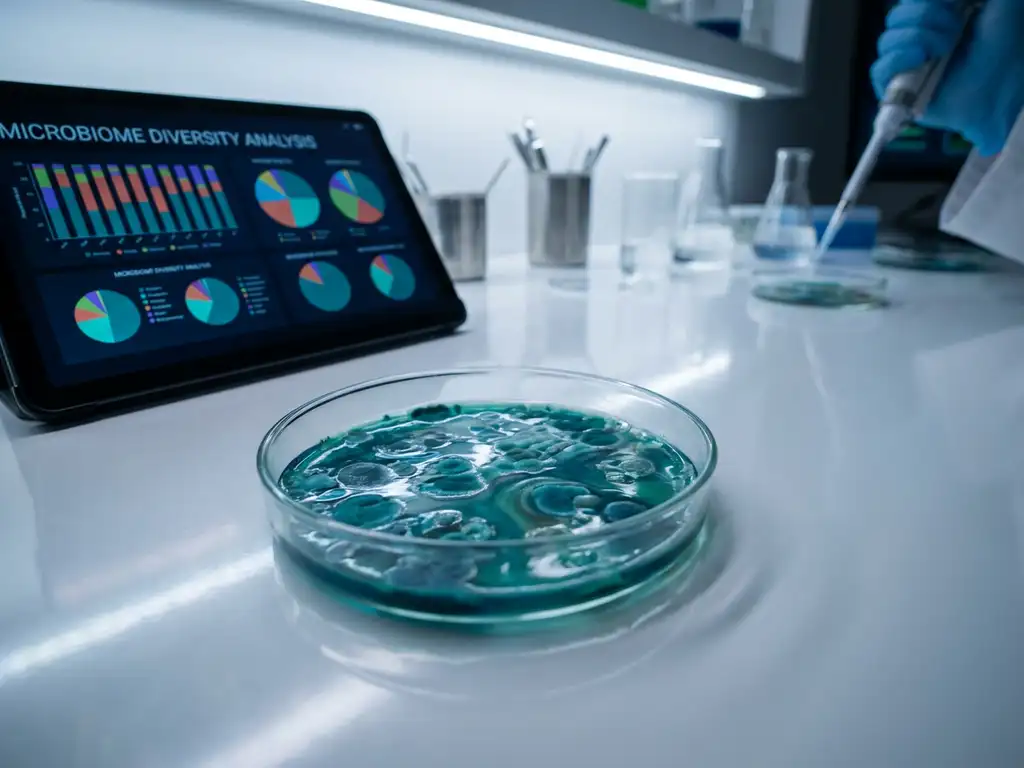
Ex vivo gut fermentation models and validated preclinical testing platforms are the most effective tools for probiotic development. These gut microbiome testing systems simulate complete gastrointestinal environments while maintaining the original microbial composition of donor samples. Unlike traditional in vitro methods or animal studies, advanced ex vivo technologies can predict clinical outcomes by capturing immediate microbial responses that drive long-term health benefits.
What makes gut microbiome testing essential for probiotic development?
Traditional testing methods fall short because they cannot predict how probiotics will perform in real human gut environments. Most in vitro approaches oversimplify the complex microbial ecosystem, while animal models have fundamentally different gut physiology from humans. This creates a “Valley of Death,” where promising laboratory results fail to translate into successful clinical trials.
The gut microbiome’s complexity requires testing that accounts for individual variation, cross-feeding interactions between microbes, and physiologically relevant conditions. Proper gut microbiome testing platforms prevent costly clinical trial failures by identifying which formulations will work across different populations before committing to expensive human studies.
Without predictive testing, companies risk investing hundreds of thousands of euros in trials that could have been avoided. Regulatory bodies such as the FDA and EFSA increasingly demand robust mechanistic evidence to support health claims, making validated preclinical data essential for product approval and market success.
Which preclinical testing methods actually predict probiotic success?
Ex vivo gut simulation technologies demonstrate the highest predictive validity for clinical outcomes. These systems preserve the original donor microbiome composition throughout testing while maintaining physiologically relevant conditions, including appropriate pH levels, oxygen gradients, and nutrient availability.
Traditional batch fermentation often suffers from suboptimal implementation, including poorly adapted media, allowing fast-growing microbes to dominate while important species disappear. Animal studies face fundamental limitations due to differences in gut transit times, bile acid composition, and taxonomy, which make results difficult to translate to humans.
The most reliable preclinical approaches combine high-throughput capabilities with biorelevance. Testing typically requires a minimum of 6–8 different donors per cohort to capture inter-individual variability and identify responder and non-responder profiles. This level of statistical power enables companies to understand which populations will benefit most from their probiotic formulations.
How do ex vivo gut fermentation models work for probiotic testing?
Advanced ex vivo systems simulate the complete gastrointestinal tract by replicating digestion, fermentation, and host–microbiome interactions under controlled conditions. These models maintain the structural and functional integrity of fresh faecal microbiomes, creating an environment that mirrors real gut conditions.
The technology operates in closed bioreactors that enable gas-pressure measurement as a tolerability biomarker. Automated systems can process more than 1,000 bioreactors per week, allowing comprehensive testing across multiple formulations and donor populations simultaneously. This throughput advantage enables rapid screening while maintaining scientific rigour.
Ex vivo models capture immediate microbial responses within 24–48 hours that predict long-term clinical outcomes. Microbes respond to probiotic interventions immediately by altering their metabolism and composition, initiating the foundational changes that drive the progressive health benefits observed in multi-week clinical studies.
What should you look for in a gut microbiome testing platform?
Validation standards are the most critical evaluation criterion. Look for published scientific publications that demonstrate a direct correlation between the platform’s results and human clinical trial outcomes. The technology must show both the starting microbiome composition and the endpoint composition without product addition, demonstrating microbial community stability.
Key platform requirements include:
- Automated systems that minimise human error and enhance reproducibility
- Capacity to test a minimum of 6–8 donors per cohort for statistical reliability
- Multi-omics analysis capabilities, including taxonomy and metabolomics
- Fresh faecal material sourcing as the gold standard for biorelevance
- Regulatory acceptance documentation to support submissions
Throughput capabilities should match your development-stage needs. Early discovery requires large-scale parallel testing for lead identification, while later-stage development demands comprehensive mechanistic insights for clinical translation and regulatory dossiers.
How does Cryptobiotix help with gut microbiome testing for probiotic development?
Cryptobiotix addresses probiotic development challenges through our validated SIFR® technology platform, which bridges the gap between preclinical data and clinical outcomes. Our ex vivo system captures immediate microbial responses that predict long-term clinical benefits, effectively solving the “Valley of Death” in microbiome research.
Our comprehensive applications include:
- Screening mode for rapid lead identification across multiple formulations
- Prism mode delivering clinical predictivity with multi-omics analysis
- Population-specific testing, including infants, adults, and disease states
- Integration with digestion models for complex functional food evaluation
- Host–microbiome interaction studies using human cell models
We provide mechanistic evidence for patent protection, de-risk clinical trials by exploring effect variability in target cohorts, and generate regulatory-grade data for EFSA and FDA submissions. Our proprietary biobank enables immediate access to pre-qualified microbiome samples, bypassing weeks of sourcing delays. Contact us to discuss how our SIFR technology can accelerate your probiotic development timeline while reducing clinical trial risk.
Frequently Asked Questions
How long does ex vivo gut microbiome testing typically take compared to clinical trials?
Ex vivo testing delivers results within 24-48 hours for immediate microbial responses, with complete analysis typically completed within 1-2 weeks. This represents a dramatic time savings compared to clinical trials, which can take 6-18 months to complete and often require multiple phases to demonstrate efficacy.
What are the main cost differences between ex vivo testing and going directly to clinical trials?
Ex vivo testing costs a fraction of clinical trials while providing predictive data that can prevent costly failures. Clinical trials typically cost hundreds of thousands to millions of euros, while comprehensive ex vivo screening can identify promising formulations and optimal populations for under 10% of that investment, significantly improving ROI.
Can ex vivo models predict probiotic effectiveness for specific health conditions or disease states?
Yes, ex vivo models can be customized using microbiome samples from specific patient populations, including those with IBS, IBD, metabolic disorders, or other conditions. This enables targeted probiotic development and helps identify which formulations work best for particular disease states before clinical testing.
What happens if my probiotic shows poor results in ex vivo testing?
Poor ex vivo results provide valuable optimization opportunities rather than dead ends. The data reveals specific issues like poor survival, lack of colonization, or adverse microbial shifts, allowing you to reformulate with different strains, adjust dosing, or modify delivery mechanisms before investing in expensive clinical trials.
How do regulatory agencies like FDA and EFSA view ex vivo gut microbiome testing data?
Regulatory agencies increasingly recognize validated ex vivo data as strong mechanistic evidence supporting health claims and clinical trial design. While not replacing clinical trials, robust ex vivo data strengthens regulatory submissions by demonstrating biological plausibility and helping justify clinical study protocols and endpoints.