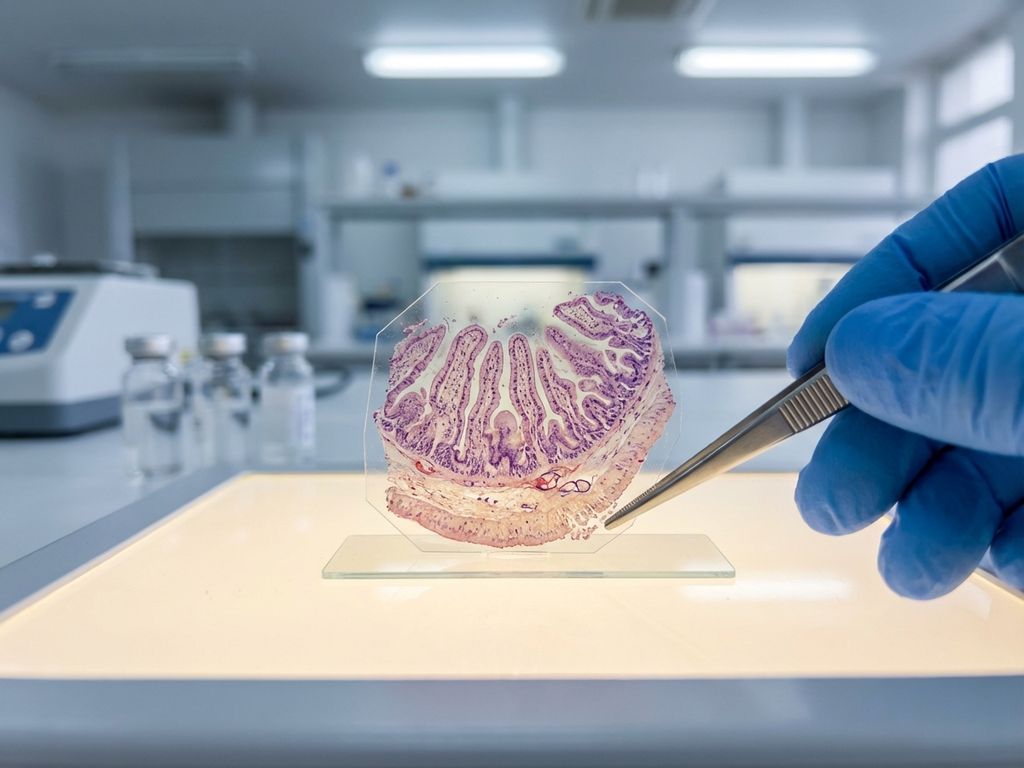
A gut model is a laboratory system designed to replicate the complex functions of the human gastrointestinal tract outside the body. These sophisticated research tools simulate digestive processes, microbial fermentation, and host–microbiome interactions under controlled conditions. Gut models enable researchers to study how foods, supplements, and pharmaceuticals interact with gut bacteria without conducting human trials, providing crucial insights for product development and regulatory submissions.
What is a gut model and how does it simulate human digestion?
Gut models are laboratory systems that recreate the physiological conditions of the human gastrointestinal tract to study digestive processes and microbial interactions. These models range from simple in vitro systems using artificial conditions to sophisticated ex vivo platforms that maintain living gut microbiota in biorelevant environments.
The three main approaches differ significantly in their biological relevance. In vitro models use artificial laboratory conditions with cultured bacteria, often leading to biased results due to oversimplified environments. In vivo models involve animal testing but suffer from poor translation to humans due to fundamental differences in gut physiology, transit times, and microbial composition between species.
Ex vivo models represent the most advanced approach, using fresh human gut microbiota samples maintained under conditions that preserve their original complexity. These systems simulate the harsh realities of the human gut environment, including appropriate pH levels (ranging from stomach acid at pH 1.5–2.0 to colonic conditions), oxygen gradients, bile salt concentrations, and intense microbial competition that characterizes the living digestive system.
Why are gut models essential for microbiome and digestive health research?
Gut models are crucial because they bridge the significant gap between promising laboratory results and real-world clinical outcomes. Traditional laboratory testing often occurs under artificially optimal conditions that bear little resemblance to the complex, dynamic human gut environment where products must actually function.
This disconnect creates what researchers call the “Valley of Death” in microbiome research, where preclinical findings fail to translate into successful clinical trials. The human gut presents multiple challenges, including stomach acid, digestive enzymes, bile salts, and competition from trillions of established bacteria that cannot be replicated in standard petri dish experiments.
Advanced gut models enable researchers to study complex gut ecosystems without the ethical concerns and limitations of human trials. They allow investigation of dose–response relationships, inter-individual variability, and mechanistic insights that are essential for understanding how interventions actually work. For regulatory submissions to agencies like EFSA and FDA, these models provide the mechanistic evidence increasingly demanded to support health claims and novel food applications.
What types of gut models exist and how do they differ?
Several categories of gut models exist, each with distinct capabilities and limitations. Static batch fermentation systems represent the foundational approach, using closed vessels to study microbial fermentation over 24–48 hours. When properly implemented with fresh human microbiota and biorelevant conditions, these systems can provide reliable, predictive data.
Continuous-flow models attempt to simulate the dynamic nature of gut transit through multi-compartment systems. However, these complex setups often suffer from selection bias as microbiomes adapt to artificial conditions over extended periods, creating microbial communities that differ significantly from the original donor samples.
Multi-compartment systems aim to replicate different sections of the gastrointestinal tract but often prioritize complexity over biological relevance. The most critical factor is not segmentation but rather maintaining the original microbiome composition and physiological conditions throughout the experiment.
Advanced ex vivo platforms represent the current state of the art, combining high-throughput capabilities with validated clinical predictivity. These automated systems can process hundreds of samples simultaneously while maintaining the biorelevance necessary for regulatory-grade data generation across diverse research applications.
How do researchers validate gut models for accurate results?
Validation of gut models requires demonstrating three core principles: reproducibility, predictive validity, and standardization. The most crucial aspect is predictive validity, proven through published studies showing direct correlation between model results and human clinical trial outcomes.
A reliable gut model must maintain the original donor microbiome composition throughout the experiment. This is verified by comparing starting microbiome profiles with endpoint compositions in control samples, ensuring the microbial community remains stable and representative of the original donor characteristics.
Standardization protocols include proper quality-control measures such as running parallel no-substrate controls, maintaining appropriate physiological conditions (pH, oxygen levels, nutrient availability), and using quantitative sequencing methods. This approach measures absolute microbial abundances rather than relative proportions, avoiding bias caused by changes in total bacterial cell density.
Validation also requires testing with sufficient donor diversity, typically 6–8 different individuals per cohort, to capture inter-individual variability and identify responder versus non-responder patterns that mirror real-world population responses.
What can gut models reveal about food, supplements, and drug interactions?
Gut models provide detailed insights into how different substances interact with gut microbiota at the mechanistic level. They reveal dose–response relationships, showing how increasing concentrations of prebiotics, probiotics, or pharmaceutical compounds affect microbial composition and metabolite production.
These systems can demonstrate the bifidogenic effects of ingredients like galacto-oligosaccharides (GOS), showing specific increases in beneficial bacteria such as Bifidobacterium species. They also reveal synergistic effects, such as how milk matrix components enhance prebiotic activity beyond the individual ingredient effects alone.
For pharmaceutical development, gut models can assess how drugs survive the harsh gut environment and interact with resident bacteria. They measure production of short-chain fatty acids (SCFAs), identify potentially harmful metabolites, and evaluate tolerability through gas production measurements.
Advanced models can be coupled with human cell cultures to investigate downstream host effects, including impacts on gut barrier integrity, immune system responses, and satiety markers like GLP-1 production, providing comprehensive mechanistic insights for regulatory dossier development.
How Cryptobiotix advances gut modeling with SIFR® technology
We provide validated, predictive gut simulation capabilities through our proprietary SIFR® technology platform, addressing the critical limitations of legacy preclinical models. Our ex vivo approach maintains fresh human gut microbiota in their original complexity, generating clinically predictive data within 24–48 hours that correlates directly with clinical trial outcomes.
Our comprehensive services include:
- Validated ex vivo fermentation using fresh, unmodified human microbiota samples
- High-throughput screening processing over 1,000 bioreactors per week
- Multi-omics analysis combining taxonomy, metabolomics, and host–microbiome interactions
- Regulatory-grade reporting with mechanistic evidence suitable for EFSA, FDA, and Health Canada submissions
- Biobanking solutions with proprietary cryopreservation methods that preserve microbiome structure and function
- Diverse population studies across age groups, disease states, and animal microbiomes
Whether you’re preparing novel food applications, building pharmaceutical regulatory dossiers, or developing functional ingredients, our SIFR® technology delivers the mechanistic data and clinical predictivity required for successful regulatory submissions. Contact us to discuss how our validated gut modeling capabilities can de-risk your product development and accelerate your path to market authorization.
Frequently Asked Questions
How long does it typically take to get results from gut model studies?
Most gut model studies using ex vivo fermentation systems like SIFR® technology can generate initial results within 24-48 hours. However, comprehensive multi-omics analysis including detailed taxonomic profiling, metabolomics, and regulatory-grade reporting typically requires 2-4 weeks for complete data processing and interpretation.
What sample size is needed for statistically meaningful gut model results?
For robust results that capture inter-individual variability, we recommend testing with microbiota from 6-8 different healthy donors per study cohort. This sample size allows identification of responder vs. non-responder patterns and provides sufficient statistical power for regulatory submissions to agencies like EFSA and FDA.
Can gut models predict how my product will perform in people with specific health conditions?
Yes, advanced gut models can use microbiota samples from donors with specific conditions like IBS, diabetes, or obesity to assess product performance in disease-relevant populations. This approach provides valuable insights into how gut dysbiosis might affect product efficacy before conducting expensive clinical trials in patient populations.
What's the difference between using fresh vs. frozen microbiota samples in gut models?
Fresh microbiota samples maintain the original microbial community structure and metabolic activity, providing the most clinically relevant results. Frozen samples, while more convenient, can suffer from cell death and altered microbial ratios that may not accurately represent the donor’s original gut ecosystem, potentially leading to less predictive outcomes.
How do I know if my ingredient concentration is realistic for gut model testing?
Concentrations should reflect physiologically relevant levels based on your intended dosing and expected gut dilution factors. Typically, this means testing concentrations that account for stomach dilution, transit time, and the approximately 1-2 liters of gut content volume where your ingredient will be active.
What regulatory agencies accept gut model data as supporting evidence?
EFSA, FDA, and Health Canada increasingly accept mechanistic data from validated gut models as supporting evidence for health claims and novel food applications. The key is using models with demonstrated clinical predictivity and following standardized protocols that generate reproducible, scientifically robust data suitable for regulatory dossiers.
Can gut models help identify potential safety concerns before human trials?
Absolutely. Gut models can detect production of potentially harmful metabolites, excessive gas production indicating poor tolerability, and disruption of beneficial bacterial populations. This early safety screening helps identify formulation issues and optimal dosing ranges before investing in costly and time-consuming human clinical studies.