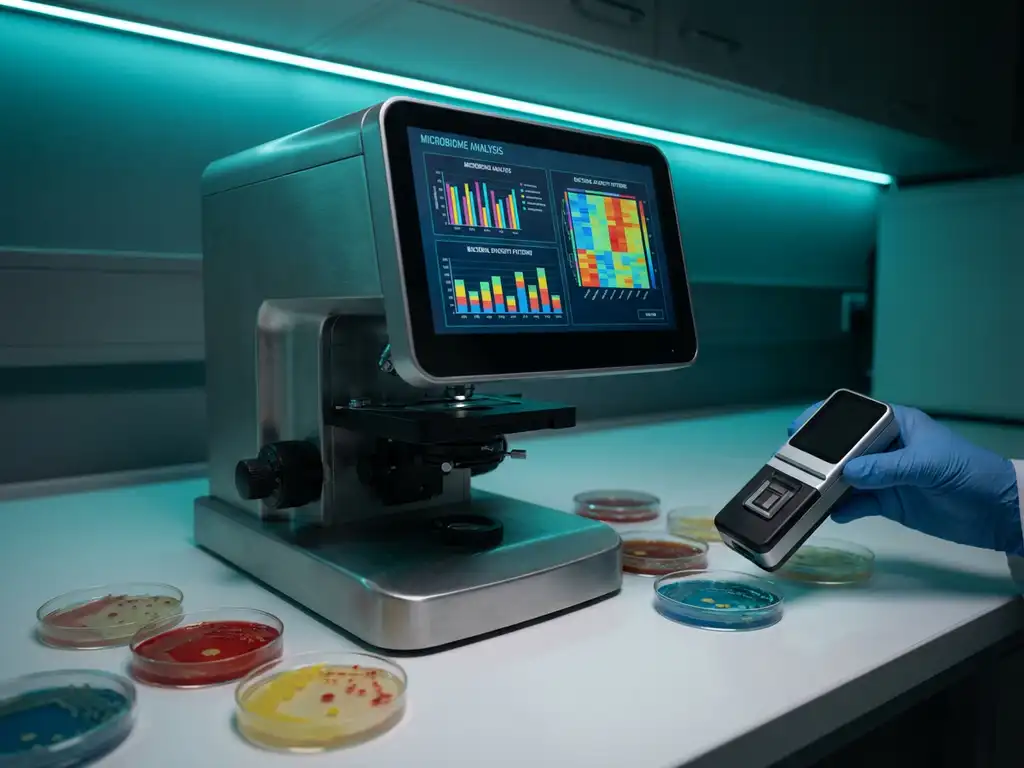
Predictive gut microbiome tests use advanced ex vivo simulation technologies that preserve the original complexity of human gut bacteria, unlike traditional cell cultures, which oversimplify the microbial environment. These tests recreate full gastrointestinal conditions to generate clinically predictive data within 24–48 hours, addressing the fundamental limitations that cause cell culture models to fail to translate to real-world outcomes.
What makes traditional cell cultures inadequate for gut microbiome research?
Traditional cell cultures fall short in gut microbiome research because they lack microbial complexity, cannot simulate interbacterial interactions, and operate under artificially controlled conditions that bear little resemblance to the human gut environment. These simplified models use sterile Petri dishes with optimal pH and abundant nutrients, whereas the human gut presents harsh, dynamic conditions, including stomach acid (pH 1.5–2.0), bile salts, digestive enzymes, and intense competition from trillions of established bacteria.
This disconnect creates what researchers call the “Valley of Death” between preclinical and clinical research. Cell culture models consistently produce promising laboratory results that fail to predict human responses in expensive clinical trials. The fundamental issue lies in their inability to capture the complex ecosystem dynamics in which beneficial bacteria must survive multiple environmental barriers and compete within established microbial communities.
Cell cultures also cannot account for the unique characteristics of individual gut microbiomes, which vary as much as fingerprints from person to person. This limitation means they miss the interindividual variability that drives inconsistent clinical trial outcomes, in which products work for some participants but not others.
How do predictive gut microbiome tests actually work?
Predictive gut microbiome tests use ex vivo simulation technologies that recreate the full gastrointestinal environment using fresh, unmodified human gut microbiota samples. These systems maintain the original donor microbiota composition throughout fermentation, typically lasting 24–48 hours, as if working with a living biopsy rather than cultured cells.
The technology employs a modular approach that simulates the full gastrointestinal tract. This includes upper GI digestion processes (mouth, stomach, small intestine) to assess physicochemical impacts, followed by colonic fermentation simulation, where non-digestible ingredients reside for approximately 48 hours. The systems operate in closed bioreactors that enable precise measurement of gas production, metabolite formation, and microbial community changes.
Advanced ex vivo models can simulate diverse gut microbiota from various populations, including infants, adults, older adults, and different disease states. They preserve the complex interbacterial relationships and metabolic pathways that exist in living gut ecosystems, generating data that mirrors clinical outcomes that typically require repeated intervention over weeks.
Why are ex vivo models more accurate than traditional testing methods?
Ex vivo models achieve superior accuracy because they preserve microbial ecosystem complexity, maintain interindividual variability, and generate clinically predictive data through high biorelevance. Unlike animal models, which differ from humans in taxonomic and functional composition, digestive physiology, gut transit times, and bile acid profiles, ex vivo systems use actual human microbiota.
The key criterion for a truly ex vivo model is its ability to maintain the microbiome composition from start to finish without product intervention. Scientific publications demonstrate this by showing that both starting and endpoint microbiome compositions remain stable and similar, confirmed through parallel no-substrate controls.
These models capture the immediate microbial responses that occur within hours of intervention, which represent the foundational events driving longer-term clinical outcomes. This approach addresses the core limitation of traditional methods: their failure to predict human responses due to low biorelevance and limited consideration of population variability. Ex vivo testing is also typically 60–80% less expensive than animal studies while providing more human-relevant data.
What types of research questions can predictive gut microbiome tests answer?
Predictive gut microbiome tests can evaluate mechanisms of action, dose-response relationships, population variability, and product efficacy across functional foods, pharmaceuticals, and biotechnology applications. These tests address specific research questions needed to accelerate and de-risk product development, from early R&D screening to in-depth characterisation for regulatory submissions.
In prebiotic development, these tests can demonstrate bifidogenic effects, short-chain fatty acid production, and metabolic pathway modulation. For probiotic research, they assess survival rates, colonisation potential, and interactions with existing microbial communities under physiologically relevant conditions. Pharmaceutical applications include screening microbiome therapeutics, evaluating drug–microbiome interactions, and identifying responder versus non-responder profiles.
The tests support regulatory dossier preparation by generating mechanistic evidence for patent protection and providing data for health claim substantiation with bodies such as EFSA and the FDA. They can stratify donors into enterotypes, investigate effects across different disease states, and provide insights for personalised nutrition strategies. This comprehensive approach helps companies build intellectual property, prepare for clinical trials, and develop targeted marketing strategies based on scientific evidence.
How do these advanced testing methods accelerate product development?
Advanced gut microbiome testing methods dramatically reduce time to market by providing rapid turnaround times of 1–2 days versus weeks of clinical testing, while offering parallel testing capabilities that enable the simultaneous evaluation of multiple formulations, doses, and target populations. This high-throughput approach allows companies to screen promising leads efficiently before committing to expensive clinical trials.
The technology enables early-stage screening that identifies the most promising product candidates, dose ranges, and target demographics before significant investment in clinical development. Companies can test multiple product combinations simultaneously, exploring synergistic effects and optimising formulations based on mechanistic insights rather than trial-and-error approaches.
These methods help secure intellectual property by generating robust mechanistic evidence and support regulatory submissions with predictive data that correlates with clinical outcomes. The ability to identify responder and non-responder profiles enables companies to design more targeted clinical trials with higher success rates, ultimately reducing the risk of costly clinical failures and accelerating the path to market approval.
How Cryptobiotix advances predictive gut microbiome testing
Cryptobiotix revolutionises preclinical gut microbiome research through our proprietary SIFR® (Systemic Intestinal Fermentation Research) technology platform, which provides validated, clinically predictive insights into product mechanisms of action. Our ex vivo technology generates data within 1–2 days that mirrors clinical outcomes that typically require weeks of repeated intervention, effectively bridging the “Valley of Death” between preclinical and clinical research.
Our comprehensive services include:
- High-throughput screening processing over 1,000 bioreactors per week with enhanced technical reproducibility through automation
- Multi-omics analysis providing insights into taxonomy, metabolomics, and host–microbiome interactions for knowledge-building and clinical trial de-risking
- Biobanking capabilities offering cryo-stabilised gut microbiome samples that preserve both structure and function, bypassing weeks of sourcing delays
- Diverse population simulation including infants, adults, older adults, disease states, and animal microbiomes for comprehensive product evaluation
Whether you need to secure intellectual property, build regulatory dossiers, or prepare for clinical trials, we provide the validated insights needed to proceed with confidence. Contact us to discover how our advanced preclinical testing can de-risk your product development and accelerate your path to market success.
Frequently Asked Questions
How long does it take to get results from predictive gut microbiome testing?
Results are typically available within 1-2 days after sample processing begins. This rapid turnaround is possible because ex vivo simulation recreates gut conditions in controlled bioreactors, eliminating the weeks or months required for traditional clinical studies while providing equally predictive data.
What sample types are required for ex vivo gut microbiome testing?
Testing requires fresh, unmodified human gut microbiota samples that preserve the original microbial community structure and function. Cryptobiotix maintains biobanking capabilities with cryo-stabilised samples from diverse populations, including different age groups and disease states, which can bypass weeks of sourcing delays.
How do I know if my product candidate is worth testing before expensive clinical trials?
Ex vivo testing is ideal for early-stage screening when you need to evaluate multiple formulations, doses, or mechanisms of action simultaneously. If your product targets gut microbiome modulation, prebiotic effects, or probiotic survival, these tests can identify the most promising candidates and optimal dosing before committing to clinical development.
Can predictive gut microbiome tests identify why some people respond to treatments while others don't?
Yes, ex vivo models can stratify donors into different enterotypes and simulate various population groups to identify responder versus non-responder profiles. This capability helps companies design more targeted clinical trials and develop personalised nutrition strategies based on individual microbiome characteristics.
What regulatory evidence can these tests provide for health claims and patent applications?
Ex vivo testing generates robust mechanistic evidence showing how products interact with gut microbiota, including metabolite production, microbial community changes, and dose-response relationships. This data supports regulatory dossier preparation for EFSA and FDA submissions, patent protection through mechanism-of-action evidence, and health claim substantiation with scientifically validated results.