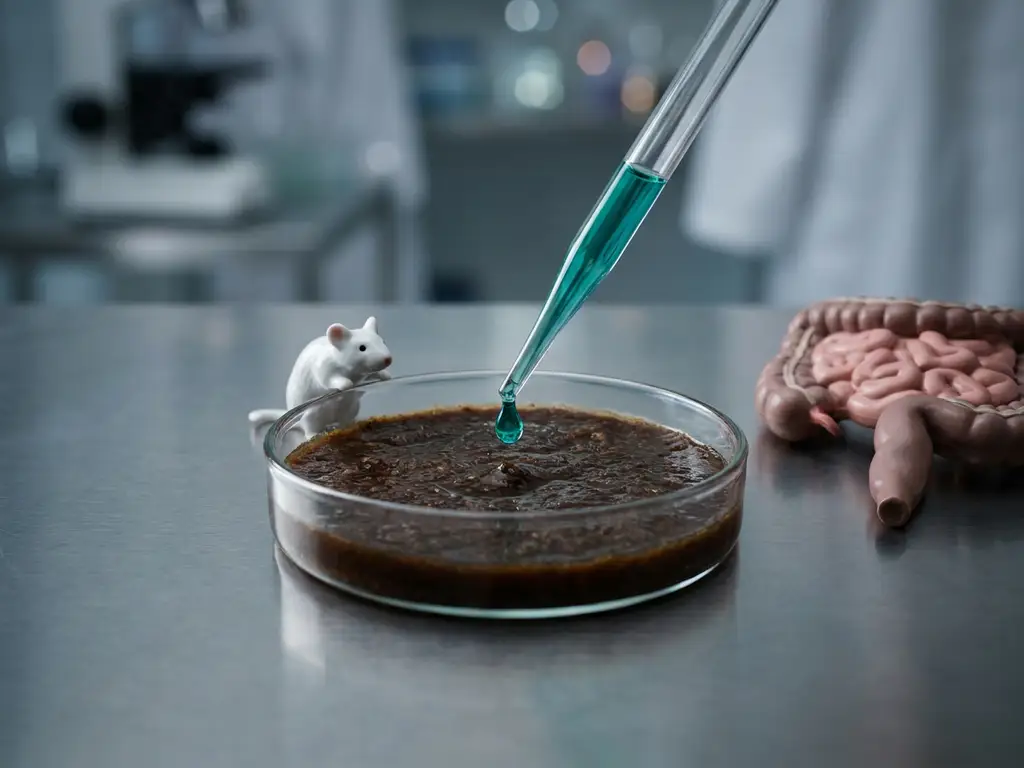
Animal models fail to predict human gut microbiome responses because species differences in microbiome effects are built into the biology and the experimental set-up. The baseline community, gut physiology, diet, and immune signalling in animals create different microbial niches and metabolite outputs, so the same intervention can look effective, neutral, or even opposite in humans. Below are the main translation breaks, plus better preclinical microbiome models for decision-grade data.
What makes animal gut microbiomes different from humans
Animal gut microbiomes differ from humans in composition and function, so identical inputs do not produce comparable fermentation and signalling outputs. Even when taxa overlap, their relative abundance, strain diversity, and metabolic capacity can be species-specific, changing which pathways dominate after an intervention.
Domestication and controlled husbandry also reshape communities. Vendor, housing room, bedding, water treatment, and chow formulation can create “facility microbiomes” that are stable within a site but not representative of humans. This matters for animal model gut microbiome work because ecological stability and baseline resilience determine whether a product shifts the community, gets ignored, or triggers compensatory cross-feeding.
- Check baseline microbiome profiles before dosing, not only endpoints.
- Document vendor and housing metadata as potential effect modifiers.
- Assume strain-level differences unless proven otherwise.
Why do diet and gastrointestinal physiology limit translation
Diet and GI physiology limit translation because they define substrate availability, transit, and chemical conditions that microbes experience. Differences in habitual diets and feeding patterns alter which carbohydrates reach the colon, while species-specific anatomy and transit time change fermentation duration and spatial niches.
Key physiological variables include bile acid pools, luminal pH gradients, mucus composition, and water content. These factors influence microbial growth rates, stress tolerance, and metabolite profiles, including short-chain fatty acids, gases, and other fermentation products. A formulation that appears to “work” in one species may simply match that species’ baseline bile and pH constraints, not a human-relevant niche.
- Map the expected human colonic exposure, then assess whether the animal model matches it.
- Measure metabolites alongside taxonomy to avoid composition-only conclusions.
- Separate upper-GI digestion questions from colonic fermentation questions.
How do immune and host factors change microbiome responses
Immune and host factors change microbiome responses because the host sets the rules for colonisation, persistence, and recovery after perturbation. Species differences in genetics, baseline immune tone, barrier function, and inflammatory signalling alter microbial selection pressures, which can shift both community structure and microbial metabolism.
Host–microbe signalling also affects whether an intervention’s metabolites translate into host-relevant effects. For example, differences in mucus secretion, antimicrobial peptides, and epithelial sensing can change which microbes thrive at the mucosal interface. This is why human microbiome predictivity often requires models that can decouple microbial fermentation from host readouts, then reconnect them using human-relevant systems.
- Define whether you need microbial causality, host response, or both.
- Include barrier and immune-proxy endpoints when the claim depends on host interaction.
- Plan for responder and non-responder dynamics driven by host context.
Which study design factors make animal results misleading
Animal results become misleading when design choices compress variability and introduce confounders that do not exist, or do not dominate, in humans. Common issues include antibiotic exposure, SPF status, caging effects, stress, age and sex imbalances, short study durations, and small group sizes that overfit to a facility-specific baseline.
Humans show high inter-individual variability, while animal studies often aim for uniformity. That uniformity can hide formulation sensitivity, dose response, and cohort effects that later drive clinical failure. “Humanised” rodents reduce some gaps, but they still impose rodent physiology, immune context, and diet constraints on a transplanted community.
- Randomise by cage, not only by animal, to reduce clustering bias.
- Predefine primary endpoints and align sampling timepoints to expected kinetics.
- Avoid interpreting absence of effect as lack of mechanism without metabolite data.
What alternatives better predict human gut microbiome responses
Better alternatives focus on human-relevant communities and conditions, then add host context only where needed. For many R&D questions, preclinical microbiome models using human-derived microbiota provide clearer mechanistic signals than animal studies, with faster iteration for formulation and dose decisions.
| Approach | Best used for | Main watch-outs |
|---|---|---|
| Ex vivo gut fermentation model | Mechanism of action, metabolite shifts, responder stratification | Requires rigorous controls to avoid in vitro bias |
| In vitro digestion plus fermentation | Matrix effects, bioaccessibility, downstream fermentation impact | Needs realistic digestive conditions and sampling strategy |
| Organoids and cell models | Barrier, immune signalling, epithelial responses to fermented media | Limited community complexity, careful exposure design needed |
| Microfluidics | Spatial gradients, controlled co-cultures, hypothesis testing | Throughput and representativeness trade-offs |
| Human cohorts and clinical studies | Efficacy confirmation and real-world variability | Cost, timelines, and limited mechanistic resolution |
- Choose models based on the decision, screen leads, then validate mechanisms with richer readouts.
- Prioritise metabolomics plus taxonomy, not one or the other.
- Design for responder stratification early, using multiple donors per cohort.
How Cryptobiotix helps with predicting human gut microbiome responses
We help teams replace low-translation animal studies with human-relevant, decision-ready preclinical testing using our ex vivo SIFR® platform. This supports faster, more confident go or no-go choices, while generating mechanistic evidence that fits R&D and regulatory workflows.
- Use the validated SIFR® technology to capture rapid microbial responses within 24 to 48 hours, including composition and metabolite shifts.
- Build mechanistic packages with multi-omics and host-relevant readouts, supported by our scientific evidence library.
- Run programmes across target sectors and populations via our applications expertise, including responder and non-responder profiling.
If you want to de-risk translation and select the right preclinical path for your product, contact us to discuss your research question and study design.