


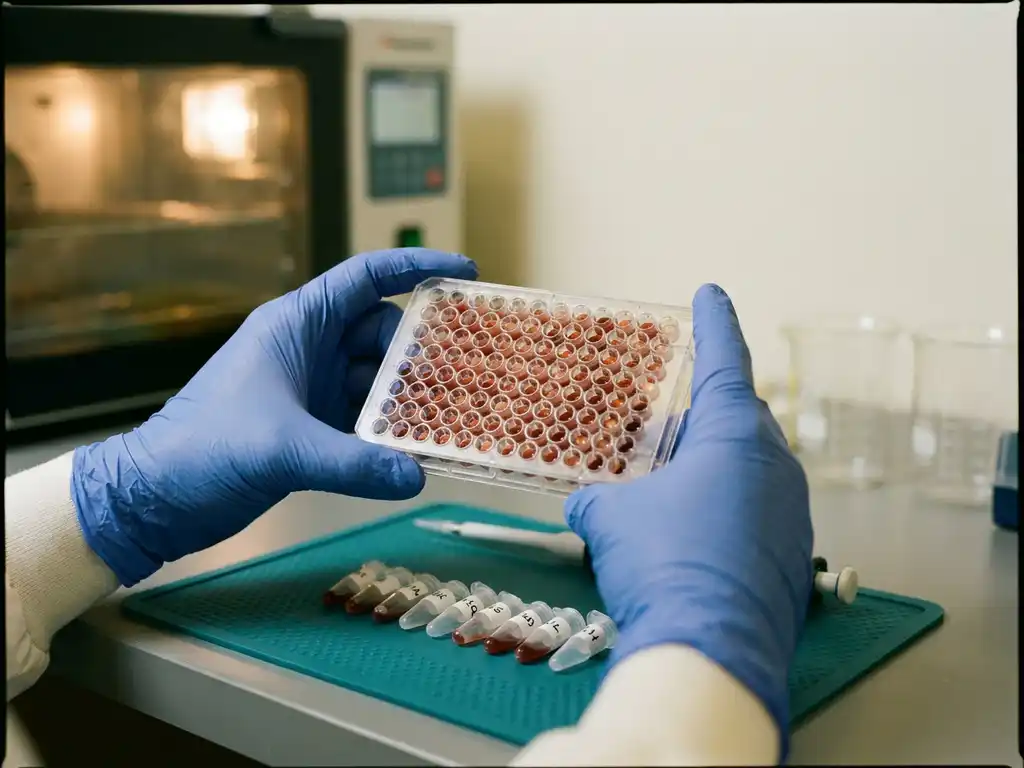
Use an ex vivo donor panel by running the same gut microbiome simulation across multiple, well characterised donor microbiomes in parallel, then comparing outputs to quantify inter-individual variability and map a population-level response. This approach reveals who responds, how strongly, and why, before committing to costly downstream work.
In practice, the value comes from deliberate panel design, tight experimental standardisation, and analysis that separates true biology from technical noise. It is most useful for B2B R and D teams who need mechanistic evidence, dose selection, and responder analysis for go/no-go decisions.
The sections below break down what donor panels simulate, how to design and run them, and how to interpret variability with confidence.
What are ex vivo donor panels and what do they simulate?
An ex vivo donor panel is a set of gut microbiome samples from multiple donors tested in parallel in a controlled gut microbiome simulation. It simulates how different real-world microbiomes may metabolise the same ingredient or formulation, enabling measurement of inter-individual variability and estimation of population-level response patterns.
Because each donor microbiome starts with a distinct community structure and metabolic capacity, the panel captures differences in fermentation kinetics, metabolite output, and community shifts that a one-donor experiment cannot reveal. For B2B development, that translates into earlier visibility on likely response ranges, potential non-responders, and mechanistic signatures that can support claims or regulatory narratives.
How do you design a donor panel to capture population variability?
Design a donor panel by defining the target population, selecting enough donors to support statistics, and controlling pre-analytical variables so the panel reflects biology rather than handling artefacts. For most responder analysis, you need a minimum of 6 to 8 donors per cohort to interpret inter-individual variability with confidence.
- Start with the decision: screening many candidates, validating a lead, or building a mechanistic dossier
- Match the cohort: healthy adults, elderly, infants, disease-relevant states, or animal cohorts depending on the product brief
- Balance diversity: include donors spanning relevant baseline microbiome features rather than near duplicates
- Standardise inputs: consistent collection timing, transport, storage, and inoculum preparation
- Pre-define exclusions: recent antibiotics or other factors that could confound interpretation, aligned to your study aim
Also decide whether you need fresh material for maximum fidelity or qualified stored material for speed and repeatability across projects. A well-designed panel is as much about operational control as it is about donor selection.
How do you run an ex vivo donor panel study and measure responses?
Run an ex vivo donor panel study by applying the same intervention and controls across all donor microbiomes under identical conditions, then measuring compositional and functional outputs over a short, biorelevant fermentation window. The goal is to capture the immediate microbial response that drives longer-term outcomes, while keeping technical variation low.
- Define conditions: test article, dose range, matrix, and exposure time aligned to the R and D question
- Include controls: no substrate or vehicle controls per donor to prove stability and enable causal inference
- Replicate properly: technical replicates to quantify assay noise and protect against outliers
- Measure function and structure: metabolites, gas production as a tolerability proxy, and microbial composition shifts
- Keep it comparable: same media, pH strategy, incubation, and sampling schedule across donors
For digestible matrices, a digestion step before colonic fermentation can be important so the colon phase receives what would realistically reach it. For many B2B programmes, the most actionable readouts combine dose response with mechanistic markers that link to your intended mode of action.
How do you analyze donor-to-donor variability and identify responder profiles?
Analyse donor-to-donor variability by normalising each donor against its own control, then quantifying effect sizes and clustering donors into response groups based on functional outputs and baseline microbiome features. A strong responder analysis distinguishes true biological non-response from low assay sensitivity, and links response to plausible mechanisms.
- Within-donor contrasts: compare treatment versus control per donor to remove baseline differences
- Effect size first: focus on magnitude and direction, not only p values
- Cluster patterns: group donors by metabolite shifts, gas kinetics, or pathway-level signatures
- Link to baseline: identify baseline taxa or functional capacity that predicts response
- Check robustness: sensitivity analyses for outliers and replicate consistency
Responder profiles become most useful when they are operational. For example, you can translate them into inclusion criteria for a targeted cohort, into hypotheses for formulation optimisation, or into a rationale for why a product shows heterogeneous outcomes in later-stage work.
What are the limitations of ex vivo donor panels and how can you mitigate them?
Ex vivo donor panels cannot reproduce every host factor, long-term adaptation, or behavioural variable that shapes clinical outcomes, so they should be used to model microbial causality rather than whole-body efficacy. You mitigate limitations by using validated gut microbiome simulation conditions, appropriate controls, and complementary host-relevant assays when needed.
- Host biology is partial: add host interaction readouts when barrier or immune signalling is central to the claim
- Time is compressed: focus on immediate microbial events that initiate progressive outcomes, rather than forcing long adaptation periods
- Selection bias risk: avoid approaches that drive strong community drift away from the donor baseline
- Panel representativeness: define the population carefully and avoid over-interpreting a narrow cohort
- Operational variability: standardise sampling, handling, and analytics to keep technical noise below biological signal
A practical rule is to treat the donor panel as a decision tool. It should narrow uncertainty, rank options, and generate mechanistic evidence, not replace later-stage confirmation where required.
How does Cryptobiotix help with simulating population-level response variability using ex vivo donor panels?
We help teams simulate population-level response variability by running high-throughput, validated ex vivo donor panel studies that preserve microbiome structure and function while enabling robust responder analysis. Our approach is built to deliver fast, decision-ready insights on inter-individual variability and mechanism of action within 1 to 2 days of fermentation.
- Validated gut microbiome simulation using our proprietary SIFR technology to reduce in vitro bias and improve clinical predictivity
- Panel scale and statistics with automation that supports multi-donor cohorts and reliable variability readouts
- Multi-omics interpretation to connect taxonomy and metabolite shifts to actionable responder profiles
- Population and sector fit across industry applications, including human and animal microbiomes
- Confidence in evidence grounded in our scientific evidence and rigorous controls
If you want to design a donor panel that answers a specific R and D decision, align on cohorts, or set up a responder strategy for your next study, contact us via our contact page.
Frequently Asked Questions
How many donors do I need if I want to compare two formulations or two doses?
Plan for enough donors to detect differences between interventions, not just variability within one. As a practical starting point, use at least 8–12 donors per cohort when comparing two conditions, and keep the same donors across conditions (paired design) to increase power. If you expect small effects or high variability, scale up and prioritise tighter standardisation over adding more endpoints.
What’s the difference between technical replicates and biological replicates in a donor panel—and how many should I run?
Donors are the biological replicates (they capture real inter-individual differences). Technical replicates are repeat fermentations of the same donor under the same condition (they quantify assay noise). A common, efficient setup is 2 technical replicates per donor per condition; increase replicates if you’re working near the assay’s sensitivity limit or if the readout is inherently noisy (e.g., gas kinetics).
Which endpoints should I choose to make the results decision-ready for product development?
Start from the decision you need to make (rank candidates, pick a dose, support a mechanism). Then select a small set of primary endpoints that map to that decision: (1) key metabolites (e.g., SCFAs, branched-chain metabolites, bile acid transformations if relevant), (2) tolerability proxies such as gas/pressure kinetics, and (3) a targeted compositional or pathway readout that supports your mode of action. Keep exploratory omics secondary so it doesn’t dilute interpretation.
How do I translate responder profiles into next steps for Ru0026D or clinical planning?
Use responder clusters to define actionable hypotheses: (1) identify baseline features that predict response and turn them into inclusion/exclusion criteria or stratification variables, (2) adjust formulation (dose, release profile, co-ingredients) to shift non-responders toward response, and (3) pre-specify a responder endpoint and analysis plan for downstream studies. Document the decision rule (e.g., minimum metabolite increase) before you look at the data to avoid post-hoc bias.
Can I use frozen donor material, and how do I ensure comparability across projects?
Yes—frozen, qualified material can improve repeatability and logistics, especially for multi-project screening. To keep comparability, use consistent collection and cryopreservation procedures, track freeze–thaw cycles, and include a reference donor or internal standard condition in every run. Periodically re-benchmark key functional outputs to confirm the panel behaves consistently over time.
What are common failure modes in donor panel studies, and how can I prevent them?
Typical issues include (1) drift away from the donor baseline due to suboptimal media or incubation, (2) confounding from inconsistent sample handling, (3) over-interpreting taxonomy changes without functional confirmation, and (4) chasing p-values across many endpoints. Prevent these by locking SOPs, running per-donor controls, prioritising effect sizes with pre-defined primary endpoints, and using QC criteria (replicate concordance, stability checks) to flag runs that shouldn’t be interpreted.
How should I report results to make them credible for internal go/no-go or external stakeholders?
Report per-donor treatment-versus-control effects, not only group averages. Include effect size distributions, responder proportions with clear thresholds, QC metrics (replicate variability, control stability), and a short mechanistic narrative linking baseline features to outcomes. If you plan to use the data in a dossier, pre-register the analysis plan internally and keep a transparent audit trail of exclusions and sensitivity analyses.
