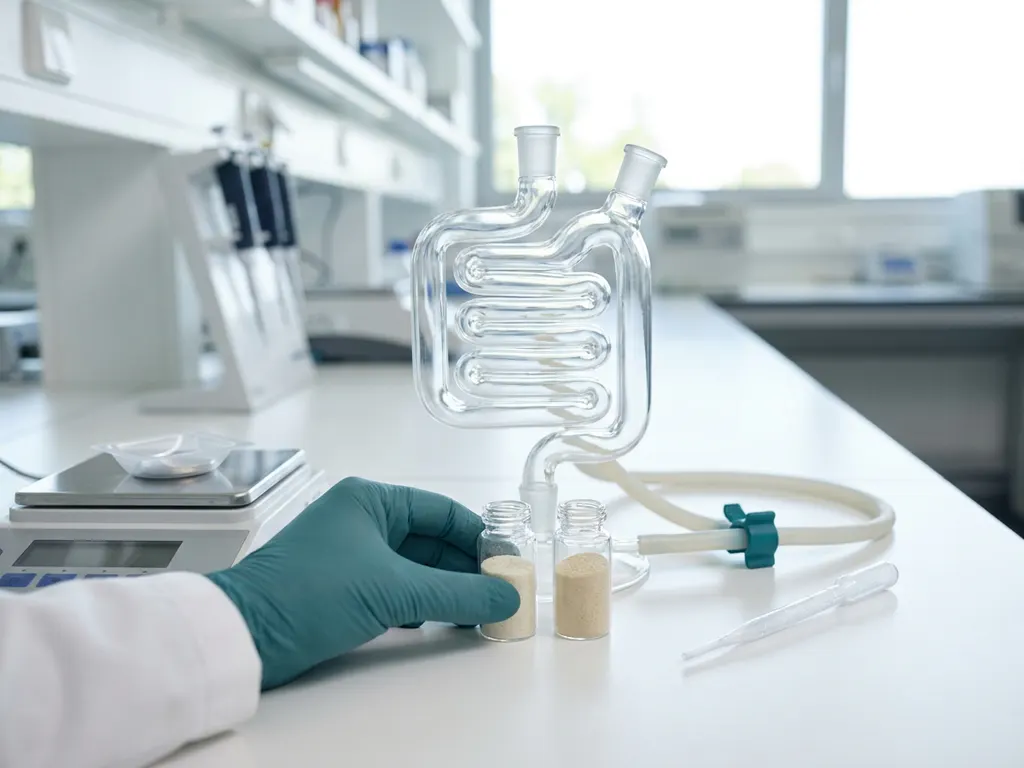
Yes, you can use an ex vivo gut model for head-to-head prebiotic testing, as long as both ingredients are tested under the same fermentation conditions, with matched doses and an appropriate donor panel. This approach enables a controlled prebiotic comparison based on gut microbiome fermentation outputs such as SCFAs, gas, pH, and microbiota shifts. Below is how these studies work, how to design them, and how to interpret results responsibly.
What are ex vivo gut models and what can they measure for prebiotics
Ex vivo gut models simulate colonic fermentation by incubating human (or animal) gut microbiota with a test substrate under controlled, anaerobic, biorelevant conditions. For prebiotics, they measure how the community metabolises the ingredient and which microbes benefit, without needing a live host. This makes them well suited for rapid ranking and mechanism-of-action work.
Typical readouts for prebiotic assessment include:
- Microbiota composition shifts (taxa changes, including bifidogenic effects)
- SCFA production (acetate, propionate, butyrate) and lactate
- Gas and fermentation pressure as a tolerability-relevant proxy
- pH dynamics and buffering demand
- Metabolite profiles (including proteolytic markers such as branched-chain fatty acids)
In practice, organisations use a high-throughput screening set-up to rank candidates, then a deeper mechanistic set-up (often with broader analytics) to explain why Ingredient A differs from Ingredient B.
How do you design a head-to-head ex vivo study to compare two prebiotic ingredients
A robust head-to-head ex vivo study controls everything except the ingredient, so any differences in gut microbiome fermentation can be attributed to the substrate. The most important design choice is the donor panel, because inter-individual variability often drives whether an effect is consistent or responder-specific. Plan the study like a comparative assay, not a one-off demo.
Key design decisions to lock down:
- Donor selection: define the target cohort (healthy adults, elderly, infant, disease-relevant), capture metadata (diet pattern, recent antibiotics, bowel habits).
- Donor number: use enough donors for statistics and responder analysis, not just one to three.
- Inoculum preparation: standardise time-to-processing, anaerobic handling, and inoculum concentration.
- Dose matching: match by fermentable carbohydrate (not just grams of powder), and document purity, moisture, and carrier excipients.
- Controls: include a no-substrate control to confirm baseline stability, plus a reference substrate if needed for benchmarking.
- Timepoints: sample across early and later fermentation to capture fast utilisation versus cross-feeding effects.
- Replication and randomisation: technical replicates, randomised plate or reactor positions, and pre-defined exclusion rules.
- Blinding: blind sample labels for analytics and interpretation to minimise bias.
Which endpoints best differentiate prebiotics in ex vivo gut models
The best differentiators combine functional outputs with community shifts. In most head-to-head prebiotic testing, SCFA profiles provide the clearest separation because they reflect net community metabolism, while taxonomy helps explain which guilds drive the change. A good endpoint set also flags trade-offs, such as high fermentation intensity that may correlate with higher gas.
| Endpoint | What it tells you | Why it helps in a prebiotic comparison |
|---|---|---|
| Acetate, propionate, butyrate | Carbohydrate fermentation outputs and cross-feeding | Shows whether Ingredient A shifts the balance versus Ingredient B |
| Branched-chain fatty acids | Proteolytic fermentation tendency | Helps detect whether a substrate reduces or displaces proteolysis |
| Lactate | Early fermentation and intermediate build-up | Can explain downstream butyrate or propionate increases via cross-feeding |
| Gas, pressure, pH | Fermentation kinetics and acidification | Differentiates “fast” versus “slow” fermenters and tolerability-relevant patterns |
| Bile acids and other metabolites | Functional shifts beyond SCFAs | Adds specificity for mechanism-of-action narratives |
| Metagenomics or metatranscriptomics | Functional potential or activity | Supports claims about pathways, not only taxa |
If you need host relevance, add a co-culture step to test barrier or immune-adjacent markers using fermented supernatants, while keeping the prebiotic comparison grounded in microbial causality.
What are the limitations of ex vivo gut models for prebiotic claims and how can you mitigate them
Ex vivo gut models cannot fully support end-to-end prebiotic claims on their own because they do not include absorption, systemic distribution, or a complete immune and endocrine system. They also run over short durations, and results can vary strongly by donor. Batch effects can occur if handling, media, or oxygen exposure differ between runs.
Mitigation strategies that strengthen decision-making:
- Use multi-donor panels to quantify variability and identify responder patterns.
- Standardise protocols (anaerobiosis, timing, controls, analytics) and automate where possible.
- Add digestion steps for complex matrices so the colon sees what would realistically arrive.
- Pre-register analysis (primary endpoints, normalisation, outlier rules) to reduce interpretation bias.
- Link to in vivo or clinical plans by translating endpoints into testable hypotheses and dose rationales.
How Cryptobiotix helps with head-to-head ex vivo prebiotic comparisons
We help teams run rigorous, decision-ready head-to-head prebiotic testing using our SIFR technology, designed for controlled, high-throughput gut microbiome fermentation with a strong focus on biorelevance and interpretability. Depending on your stage, we align study design and analytics to either rank candidates quickly or build a mechanism-of-action package.
- Study design support for donor strategy, dose matching, controls, and bias minimisation
- Access to cohort-relevant microbiota via panels and biobanking workflows
- Endpoints spanning SCFAs, gas, pH, taxonomy, and optional multi-omics, with clear reporting
- Guidance on positioning outputs for R&D, regulatory, and portfolio decisions across our applications
- Transparent validation approach and background on scientific evidence expectations
If you are planning a head-to-head ex vivo prebiotic comparison, share your ingredients, target cohort, and decision criteria via our contact page, and we will propose a fit-for-purpose study set-up.
FAQ
How many donors do you need for a credible head-to-head prebiotic comparison?
Use enough donors to capture inter-individual variability and support statistics, typically a multi-donor panel rather than one to three individuals. This is essential for identifying consistent effects versus responder-only effects.
Should you match prebiotic doses by grams or by fermentable carbohydrate?
Match doses by fermentable carbohydrate delivered to the microbiota, then document purity, moisture, and excipients. Matching by grams of powder can bias results if one ingredient contains more non-fermentable material.
Can ex vivo gut models predict tolerability differences between prebiotics?
They can compare fermentation intensity using gas, pressure, and pH as proxies, which helps flag ingredients that ferment faster or produce more gas under the same conditions. This does not replace human tolerability assessment, but it supports risk-based prioritisation.
Do you need 72 hours to observe cross-feeding in gut microbiome fermentation?
Not necessarily. Cross-feeding can be observed within shorter windows when the model preserves the original community structure and uses appropriate conditions and controls, so early causal shifts can be captured without extended adaptation.