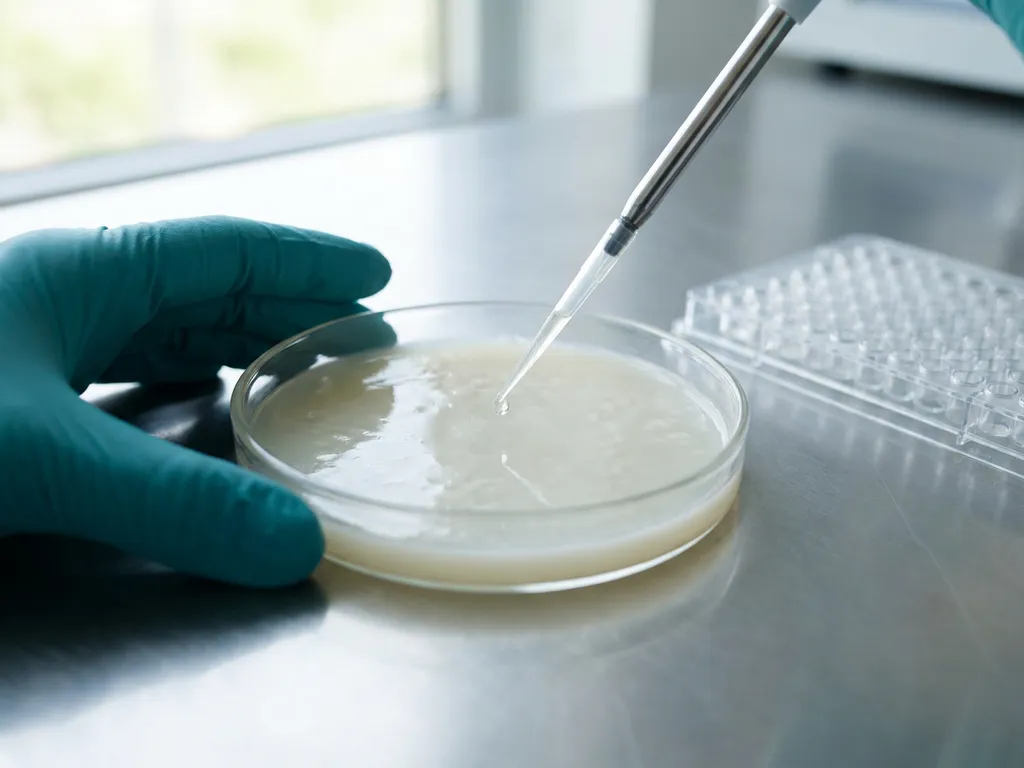
To predict probiotic efficacy before a human feeding study, combine strain verification and product stability testing with functional assays and a preclinical gut microbiome model that captures inter-individual variability. The goal is not to “prove” clinical benefit, but to generate mechanistic, dose-relevant evidence and identify likely responders, endpoints, and risks. Below are the key questions teams ask when building a credible, decision-ready preclinical package.
What does “probiotic efficacy” mean before a human study
Before a human study, “probiotic efficacy” means demonstrating a plausible probiotic mechanism of action under biorelevant conditions, with measurable, reproducible effects. It is best framed as three layers: survival (can the strain remain viable through processing and GI stresses), activity (does it perform a function in a gut-relevant environment), and clinical benefit (a hypothesis to test later, not a preclinical claim).
Typical preclinical endpoints include microbiome modulation (community shifts), metabolite changes (for example, SCFAs, lactate, bile acid transformations), and host-relevant readouts (barrier or immune signalling in co-cultures). Efficacy is always strain-specific and indication-specific, so endpoints should map to the intended claim and target population.
Which preclinical tests best predict probiotic efficacy
The most predictive approach is a tiered test battery that starts with identity and quality, then moves to function in complex communities. No single assay predicts outcomes on its own, so combine orthogonal tests to reduce false positives and false negatives.
- Strain ID and genomics: confirm taxonomy, screen for safety-relevant features (for example, AMR gene concerns), and support traceability.
- Viability and stability: shelf-life, matrix compatibility, and viability through manufacturing and storage.
- GI stress tolerance: acid and bile tolerance, plus digestion-relevant exposure if delivered in food or capsules.
- Adhesion and functional assays: epithelial adhesion proxies, enzyme activities, and immunomodulatory signalling in controlled systems.
- Antimicrobial activity: inhibition of target organisms, with care to distinguish acidification from specific antagonism.
- Metabolomics: functional output, not just who is present.
- Multi-donor fermentation: tests performance across multiple human microbiomes to capture variability and improve human trial readiness.
How can ex vivo gut models estimate real-world responses
An ex vivo gut simulation estimates real-world responses by fermenting the candidate probiotic with intact human gut microbiota under controlled, physiologically relevant conditions. This allows you to observe immediate microbial responses, dose-response behaviour, and donor-to-donor variability, which helps you form testable clinical hypotheses without waiting weeks for intake studies.
In practice, ex vivo colonic fermentation can quantify community shifts and functional outputs such as SCFAs, lactate, and other metabolites, alongside gas production as a tolerability proxy. Using multiple donors supports responder and non-responder profiling, which can inform inclusion criteria, stratification variables, and which endpoints are realistic for a first feeding study.
What biomarkers and endpoints should be used to screen candidates
Use biomarkers that are measurable, interpretable, and aligned to the intended claim. A good screening panel mixes community structure with function, then adds host-relevant readouts only where they strengthen the mechanistic story. Avoid overclaiming by treating biomarkers as evidence of mechanism, not proof of clinical outcomes.
| Endpoint type | Examples | What it helps you decide |
|---|---|---|
| Microbial metabolites | SCFAs (acetate, propionate, butyrate), lactate | Functional shift and plausible mechanism |
| Bile acid transformations | Primary to secondary patterns, deconjugation signals | Metabolic impact hypotheses and safety flags |
| Tolerability proxy | Gas pressure/production in closed systems | Formulation and dose feasibility |
| Pathogen suppression | Reduced growth of undesirable taxa, reduced harmful metabolites | Competitive effects and ecological impact |
| Host-linked readouts (co-cultures) | Barrier integrity (for example, TEER), inflammatory markers | Downstream plausibility for clinical endpoints |
How do you decide if a probiotic is ready for a feeding study
A probiotic is ready for a feeding study when the preclinical package shows consistent directionality, a credible mechanism, and practical feasibility, with no obvious safety or quality blockers. The decision should be a structured go or no-go gate, not an informal judgement based on one promising assay.
- Reproducibility: consistent results across runs, operators, and relevant matrices.
- Effect directionality: clear, interpretable shifts in chosen biomarkers, aligned to the claim.
- Safety screen: AMR gene risk assessment, absence of haemolysis, and appropriate strain documentation.
- Manufacturability: scalable production, acceptable purity, and batch consistency.
- Stability and dosing feasibility: a viable dose achievable at the end of shelf-life in the intended format.
- Mechanistic plausibility: coherent link from microbial changes to host-relevant hypotheses.
- Regulatory readiness: documentation suitable for dossiers and claims substantiation planning.
How Cryptobiotix helps with predicting probiotic efficacy before a human feeding study
We help teams predict probiotic efficacy and build human trial readiness by generating decision-grade mechanistic evidence with our validated ex vivo capabilities and end-to-end preclinical CRO support. Depending on your question, we can support early screening through to deeper mechanistic characterisation.
- Run studies using the SIFR technology to quantify microbiome and metabolite responses across multiple donors.
- Design endpoint panels that match your intended claim and development stage, including tolerability proxies and host-relevant co-cultures where appropriate.
- Support sector-specific programmes across human and animal health via our applications expertise.
- Provide clear documentation of model validation and outputs through our scientific evidence resources.
If you want to de-risk your next feeding study with a focused preclinical plan, contact us to discuss your strain, target population, endpoints, and timelines.
FAQ
- Can preclinical work replace a human feeding study?
No. Preclinical work reduces uncertainty by narrowing candidates, doses, and endpoints, but it does not establish clinical efficacy. - How many donors should be included in a microbiome efficacy screen?
Use enough donors to capture variability and enable basic statistics. In practice, multi-donor designs are preferred over 1 to 3 donor set-ups, which often miss responder effects. - Is “survival through digestion” the same as efficacy?
No. Survival is a prerequisite for many strains, but efficacy depends on functional activity and measurable ecosystem or host-linked effects. - What is the biggest red flag in probiotic preclinical data?
Overinterpreting single-assay results without controls, multi-donor confirmation, or functional readouts that connect to a plausible mechanism.