


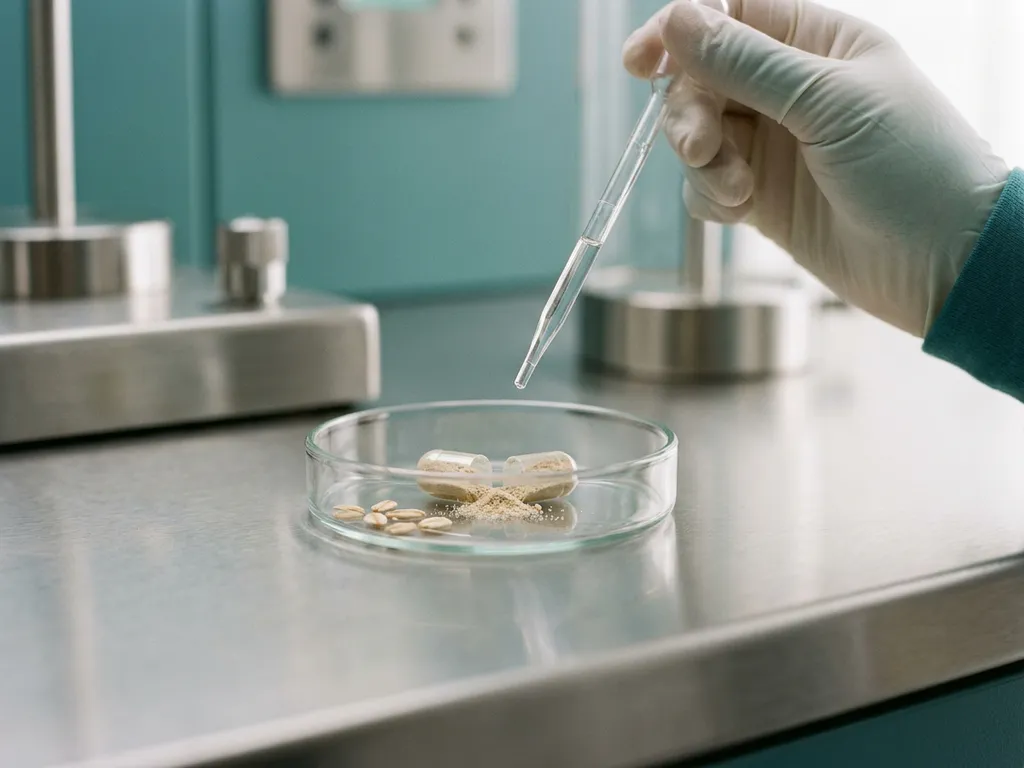
Science suggests synbiotics can help reduce probiotic non-response by pairing a probiotic strain with a compatible substrate that improves survival, metabolic activity, and ecological fit in the recipient gut. This approach can shift more individuals from non-responder to responder by supporting consistent engraftment and functional outputs.
The strongest rationale is mechanistic: many probiotic interventions fail not because the strain is inactive, but because the gut environment does not provide the resources or conditions the strain needs to persist and produce the intended metabolites. Synbiotics target that bottleneck through deliberate prebiotic and probiotic pairing.
The questions below break down why probiotic non-responders occur, how synbiotics work, what clinical evidence generally indicates, and how to design more predictive, responder-focused development programmes.
What is probiotic non-response and why does it happen?
Probiotic non-response describes a pattern where a probiotic intervention produces little or no measurable change in a target outcome for a subset of individuals, even when the same product shows effects in others. It happens because gut microbiomes differ in baseline composition, available nutrients, colonisation resistance, and metabolic capacity, which can block strain activity.
In B2B R and D terms, non-response usually shows up as high inter-individual variability across endpoints such as strain detection, shifts in community structure, or functional readouts like short-chain fatty acid production. Common drivers include:
- Colonisation resistance from an established community that outcompetes or inhibits the incoming strain
- Missing ecological niche where the strain lacks a place to persist or lacks required co-factors
- Substrate limitation where the strain cannot access fermentable carbohydrates it needs to be active
- Baseline microbiome state such as low abundance of cross-feeding partners or different bile acid profiles
- Formulation and delivery effects including matrix interactions that change viability and exposure
For product developers, the key point is that non-response is often predictable if you measure the right baseline features and test across enough donors to capture variability.
What are synbiotics, and how are they different from probiotics or prebiotics alone?
Synbiotics are combinations of live microorganisms and a substrate that is selectively utilised by host microorganisms, designed to deliver a measurable health or functional benefit. Unlike probiotics alone, synbiotics include a targeted fuel source. Unlike prebiotics alone, synbiotics also introduce a defined strain or consortium to steer function.
In practice, teams often distinguish two design logics:
- Complementary synbiotics where the prebiotic broadly supports beneficial taxa and the probiotic adds an additional function
- Synergistic synbiotics where the prebiotic is chosen specifically to feed the paired probiotic, improving survival and activity
This distinction matters for development claims. Complementary designs can improve overall gut microbiome modulation, while synergistic designs aim to reduce probiotic non-responders by engineering a more reliable ecological outcome.
How can synbiotics help overcome non-response to probiotics?
Synbiotics can overcome non-response by changing the gut ecosystem in ways that make the probiotic more likely to persist and express its intended function. By providing a compatible substrate and shaping cross-feeding networks, synbiotics reduce the chance that the probiotic is starved, outcompeted, or metabolically silent in certain microbiomes.
Mechanistically, synbiotics can improve responder rates through several levers:
- Improved survival and activity by supplying fermentable substrates that support growth under colonic conditions
- Stronger functional signal by driving metabolite production that is easier to detect than compositional shifts alone
- Network effects where the prebiotic boosts partner taxa that unlock cross-feeding pathways
- Reduced variability by buffering differences in baseline diet-derived substrate availability
For R and D, the goal is not to force identical microbiome changes in every individual, but to make the functional mechanism more consistent across diverse baseline communities.
What does the clinical evidence say about synbiotics versus probiotics for different outcomes?
Across clinical programmes, synbiotics often show more consistent effects than probiotics alone when the outcome depends on microbial metabolism, because the added substrate can stabilise functional responses across participants. However, results vary by strain, substrate, dose, and endpoint, and synbiotics do not automatically outperform probiotics if the pairing is not mechanistically aligned.
From an evidence interpretation standpoint, it helps to map outcomes into categories:
- Engraftment and detectability where synbiotics may increase the likelihood of recovering the strain or its functional signature
- Metabolic outputs such as shifts in fermentation products, where substrate availability is a direct limiting factor
- Tolerability-linked signals where fermentation intensity and gas dynamics can influence perceived effects and adherence in trials
For decision makers, the practical takeaway is to define success criteria that match the mechanism. If the intended benefit relies on fermentation, a synbiotic rationale is stronger than if the intended benefit is independent of substrate utilisation.
How do you design a synbiotic intervention to maximize responder rates?
To maximise responder rates, design synbiotics around a testable mechanism that links the prebiotic and probiotic, then validate that mechanism across a sufficiently diverse donor set before committing to expensive trials. The best designs specify the strain function, the substrate utilisation pathway, and the expected functional readouts, not just the ingredients list.
A B2B-ready design workflow typically includes:
- Define the mechanism of action in microbiome terms, such as targeted metabolite shifts, cross-feeding activation, or competitive exclusion
- Select a rational pair by matching the probiotic’s carbohydrate utilisation profile to the prebiotic structure and dose range
- Test across inter-individual variability using multiple donors to identify probiotic non-responders and quantify how the synbiotic changes that distribution
- Choose endpoints that travel from preclinical to clinical, prioritising functional markers over purely compositional changes
- Stress test formulation variables such as matrix effects, digestion exposure, and co-ingredients that may alter availability
Where teams are building personalized microbiome interventions, stratification becomes part of the design: you can define inclusion criteria, responder signatures, or product positioning based on baseline microbiome features rather than assuming a one-size-fits-all effect.
How does Cryptobiotix help with using synbiotics to overcome non-response in probiotic interventions?
Cryptobiotix helps teams develop synbiotics that reduce probiotic non-responders by generating fast, predictive preclinical evidence on how prebiotics and probiotics interact across diverse microbiomes. We use our validated ex vivo platform to quantify gut microbiome modulation within 1 to 2 days, supporting mechanism of action, dose-response, and responder stratification decisions.
- Mechanistic validation of synbiotic pairings using SIFR technology to capture immediate microbial responses that drive longer-term outcomes
- Responder profiling by testing across enough donors to map variability and identify conditions that convert non-responders into responders
- Actionable outputs through multi-omics readouts that connect taxonomy to metabolite changes and tolerability proxies
- Industry fit across food, supplements, pharma, and animal health via our industry applications focus
- Confidence in decisions supported by our scientific evidence base for predictive ex vivo gut simulation
If you are evaluating synbiotics to improve consistency and reduce trial risk, start a technical discussion with our team via the contact page.
Frequently Asked Questions
How do you choose a prebiotic substrate that’s truly synergistic with a specific probiotic strain?
Start with the strain’s carbohydrate utilisation profile (genomics + in vitro growth on candidate fibres), then confirm in a complex community model. Prioritise substrates that (1) the strain can directly metabolise, (2) remain available in the colon at the intended dose, and (3) produce the target metabolites (e.g., SCFAs) without excessive gas in sensitive populations.
What endpoints best demonstrate that a synbiotic reduced non-response (beyond symptom questionnaires)?
Use a combination of (1) strain-specific detection (qPCR/metagenomics), (2) functional readouts tied to the mechanism (SCFAs, lactate, bile acids, indoles, pH), and (3) variability metrics (responder rate, effect size distribution, coefficient of variation). Predefine responder criteria and report how the synbiotic shifts the non-responder proportion.
How many donors or participants do you need to reliably detect responder vs non-responder patterns?
It depends on baseline variability and the endpoint, but plan for enough diversity to capture common microbiome states. In preclinical donor-based work, dozens of independent donors are often needed to map response distributions; in clinical trials, power for responder-rate differences (not just mean change) and include stratification variables so you can test interaction effects.
Can synbiotics backfire—e.g., increase bloating or worsen tolerability—and how can you mitigate that risk?
Yes. Fermentable substrates can increase gas and osmotic load, especially at higher doses or in sensitive cohorts. Mitigate by titrating dose, selecting fibres with slower fermentation kinetics, splitting dosing, pairing with strains that shift fermentation toward more tolerable end-products, and including tolerability proxies (gas, hydrogen/methane, stool changes) as monitored endpoints.
When is a complementary synbiotic a better choice than a synergistic one?
Choose complementary designs when the goal is broader ecosystem support (e.g., increasing overall fibre fermentation capacity) and the probiotic’s benefit is not dependent on directly consuming the added substrate. They can also be preferable when regulatory or formulation constraints limit tight strain–substrate matching, or when you want a more generalisable product across diets.
How should developers handle baseline diet and fibre intake when testing synbiotics?
Control or measure it. In trials, record habitual fibre intake, standardise key dietary variables where feasible, and analyse diet as a modifier of response. In development, test the synbiotic across different background substrate conditions to ensure the added prebiotic meaningfully buffers real-world dietary variability rather than being redundant.
What are practical next steps if your probiotic shows high variability in early studies?
Audit the mechanism and delivery first (viability, dose, matrix, timing), then run responder profiling to identify baseline features linked to non-response. Use those insights to (1) add a rational substrate (synbiotic), (2) adjust dose/formulation, (3) refine endpoints toward functional markers, and (4) consider stratified recruitment or positioning based on responder signatures.
