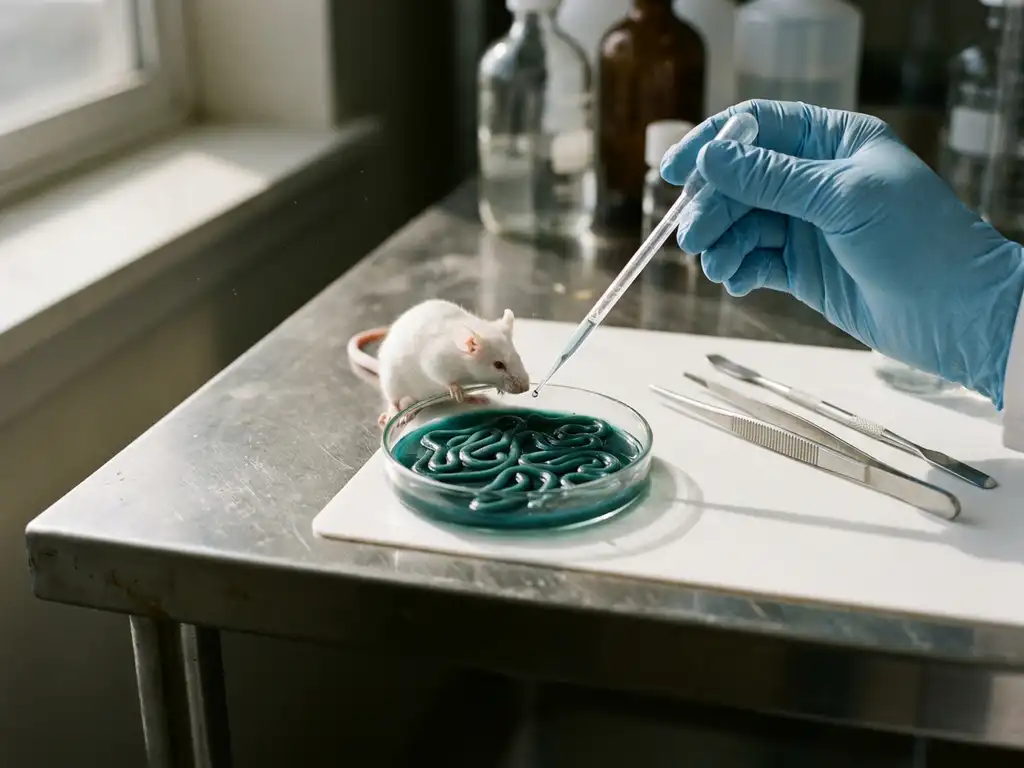
Animal model results rarely translate to human gut microbiome outcomes because species differences in gut physiology and microbial ecology change how interventions are processed, fermented, and metabolised. Even when an animal study looks well controlled, it often measures effects that are specific to that species rather than predictive of human responses.
This translation gap is amplified by microbiome variability across individuals, plus study design and husbandry factors that reshape animal microbiomes in ways that do not mirror real-world human populations. The sections below break down the main biological and experimental drivers and the most practical ways to improve human translation microbiome confidence in preclinical microbiome research.
Why do animal gut microbiome findings often fail to translate to humans?
Animal models’ gut microbiome findings often fail to translate because the intervention interacts with a different host environment, a different baseline microbiome, and different diet and transit dynamics than in humans. As a result, the same ingredient can produce different metabolites, different microbial shifts, and different tolerability signals, undermining human translation microbiome reliability.
In practice, translation fails for three recurring reasons. First, the gut microbiome is not a standalone system. It is tightly coupled to host factors such as bile acids, immune signalling, and gut motility, all of which differ by species. Second, many animal studies use simplified cohorts that cannot represent microbiome variability seen in human populations. Third, the experimental environment can override biology, meaning the housing and feeding conditions become the main driver of the observed effect.
What are the biggest biological differences between animal and human gut microbiomes?
The biggest biological differences include distinct microbial community structures, different functional capacity for fermentation, and different gut physiology such as pH, bile acid composition, and transit time. These factors change which microbes thrive, what substrates reach the colon, and which metabolites are produced, making animal models’ gut microbiome outcomes hard to extrapolate to humans.
From a mechanistic perspective, translation problems often show up as mismatched metabolic readouts. A product may increase certain fermentation end products in one species but not in humans because the relevant cross-feeding networks are absent or operate differently. Likewise, differences in bile acids and transit can change solubility and exposure time, shifting the dose-response relationship that R and D teams need for decision making.
- Host physiology: Differences in pH gradients, bile acids, and gut transit alter microbial growth conditions and substrate availability.
- Microbial ecology: Baseline taxa and functional pathways differ, changing fermentation routes and metabolite profiles.
- Dietary context: Standardised animal diets do not reflect human dietary diversity, which strongly shapes microbiome responses.
How do study design and husbandry factors distort animal microbiome results?
Study design and husbandry distort results by changing the animal microbiome before the intervention even begins. Housing, bedding, stress, antibiotic exposure, batch effects in feed, and cage-level microbial sharing can all shift community composition and function, creating effects that look like treatment signals but are actually environmental artefacts.
Two design choices commonly reduce interpretability. One is underpowered sampling that misses responder and non-responder patterns, which are central to microbiome variability. The other is weak controls, for example missing negative controls or insufficient baseline characterisation, which makes it hard to separate true mechanism from drift.
- Cage effects: Co-housing can homogenise microbiomes, masking inter-individual differences and inflating apparent reproducibility.
- Diet and feed batches: Small formulation changes can drive large fermentation differences, especially for fibre-rich diets.
- Stress and handling: Stress alters motility and immune tone, indirectly reshaping microbial activity.
- Timing and endpoints: Sampling windows can miss the immediate microbial response that later drives progressive host outcomes.
What can researchers do to improve translation from preclinical microbiome studies?
Researchers can improve translation by prioritising human-relevant biology, designing studies around microbiome variability, and selecting endpoints that connect microbial change to mechanism of action. In preclinical microbiome research, this means using human-derived microbiomes where possible, running enough biological replicates to capture responder patterns, and applying rigorous controls to separate treatment effects from drift.
For B2B R and D teams, the goal is not to eliminate uncertainty but to reduce expensive downstream risk. A practical approach is to treat translation as a staged funnel: screen broadly for signal, then validate with deeper mechanistic and variability-aware testing before committing to clinical or feeding trials.
- Design for variability: Include multiple donors or microbiomes to quantify microbiome variability and identify responder profiles.
- Use fit-for-purpose endpoints: Combine taxonomy with functional readouts such as metabolite profiles and gas production for tolerability signals.
- Control for drift: Include no-substrate controls and standardised protocols to demonstrate microbiome stability without the intervention.
- Align exposure with reality: Match dose form and digestion context so the colon sees what it would see in humans.
How can ex vivo human gut models bridge the gap between animals and clinical outcomes?
An ex vivo gut model bridges the gap by testing interventions directly on human gut microbiomes under controlled, biorelevant conditions, reducing species mismatch and improving human translation microbiome confidence. Because microbial responses can occur within hours, ex vivo approaches can capture the initial causal shifts in composition and metabolism that later underpin longer-term clinical outcomes.
Ex vivo does not mean simplistic. A robust ex vivo approach maintains the starting community structure and function, uses appropriate controls, and supports throughput high enough to represent inter-individual variability. This is particularly valuable when animal testing is not required for microbiome modulation questions and when teams need faster, more predictive preclinical microbiome research to de-risk decisions.
In addition, ex vivo testing can be more cost efficient than animal studies, enabling broader experimental matrices such as multiple formulations, doses, and target cohorts without multiplying timelines. For teams evaluating where an intervention fits across markets, it also helps to map use cases across industry applications while keeping the biology human relevant.
How does Cryptobiotix help with translating preclinical gut microbiome results to humans?
We help translate preclinical gut microbiome results to humans by using our validated SIFR® platform as an ex vivo gut model that maintains human microbiome structure and function while generating mechanistic, variability-aware readouts within 24 to 48 hours. This approach supports stronger human translation microbiome decision making than relying on animal models’ gut microbiome signals alone.
- Validated ex vivo predictivity: SIFR® is designed to produce outcomes that mirror clinical directionality by capturing immediate microbial responses that drive progressive host outcomes.
- Throughput for microbiome variability: Automated workflows enable testing across multiple donors to identify responders and non-responders with meaningful statistics.
- Mechanism-focused outputs: Multi-omics readouts link taxonomy to functional metabolites and tolerability proxies such as gas production.
- Evidence-ready reporting: Outputs are structured to support R and D decisions, IP strategy, and regulatory dossiers, backed by our scientific evidence.
- Modular GI simulation: When needed, studies can integrate digestion context and host interaction layers alongside the core SIFR® technology.
If you want to replace low-translation animal work with faster, human-relevant preclinical microbiome research, start a discussion with our team via the contact page.
Frequently Asked Questions
When should I still use an animal model in microbiome R&D?
Use animals when you need whole-organism endpoints that ex vivo systems cannot capture, such as systemic immune effects, pharmacokinetics of absorbed compounds, safety/toxicology requirements, or host–microbe interactions that depend on intact physiology. For microbiome modulation claims (community shifts, fermentation, metabolite directionality), start with human-relevant ex vivo or in vitro screening and reserve animals for specific, hypothesis-driven questions.
How many human donors do I need in an ex vivo microbiome study to account for variability?
Plan donor numbers around the decision you need to make: for early screening, 6–10 donors often reveals responder/non-responder patterns; for stronger confidence or subgroup comparisons, 12–20+ donors is common. Predefine what counts as a “responder,” stratify by relevant metadata (e.g., baseline SCFA levels, enterotype-like profiles), and analyse results per donor rather than only pooled averages.
What endpoints best predict whether a prebiotic or fibre will be tolerated in humans?
Combine functional readouts: gas production kinetics (total and rate), pH change, and key metabolites (SCFAs, lactate, branched-chain fatty acids) alongside substrate disappearance. Look for dose-dependent gas spikes, sustained lactate accumulation, or large pH drops as early warning signals, then validate with realistic dosing and digestion context.
How do I choose doses and formats so ex vivo results are more clinically relevant?
Back-calculate the colonic exposure: start from the intended human serving, estimate the fraction reaching the colon after digestion, and test that range (e.g., 0.5×, 1×, 2×). Match the real format (powder, encapsulated, matrix-bound) and include a digestion step when upper-GI breakdown changes what microbes actually see.
What controls should be included to separate true treatment effects from microbiome drift?
At minimum include: a no-substrate/blank control, a positive control with a known fermentable substrate, and baseline (time-zero) profiling per donor. Randomise and balance batches, run technical replicates where feasible, and track stability markers (community similarity, pH, total biomass) to show the system is stable without the intervention.
How can I connect ex vivo microbiome shifts to a human claim or regulatory dossier?
Define the claim first (e.g., “supports regularity,” “supports gut comfort,” “supports metabolic health”), then map it to mechanistic biomarkers (SCFAs, bile acid modulation, gas/tolerability proxies) and a clear chain of evidence. Use ex vivo data to justify dose selection and mechanism, then confirm with targeted clinical endpoints and appropriate study populations; keep methods and statistics audit-ready for substantiation.