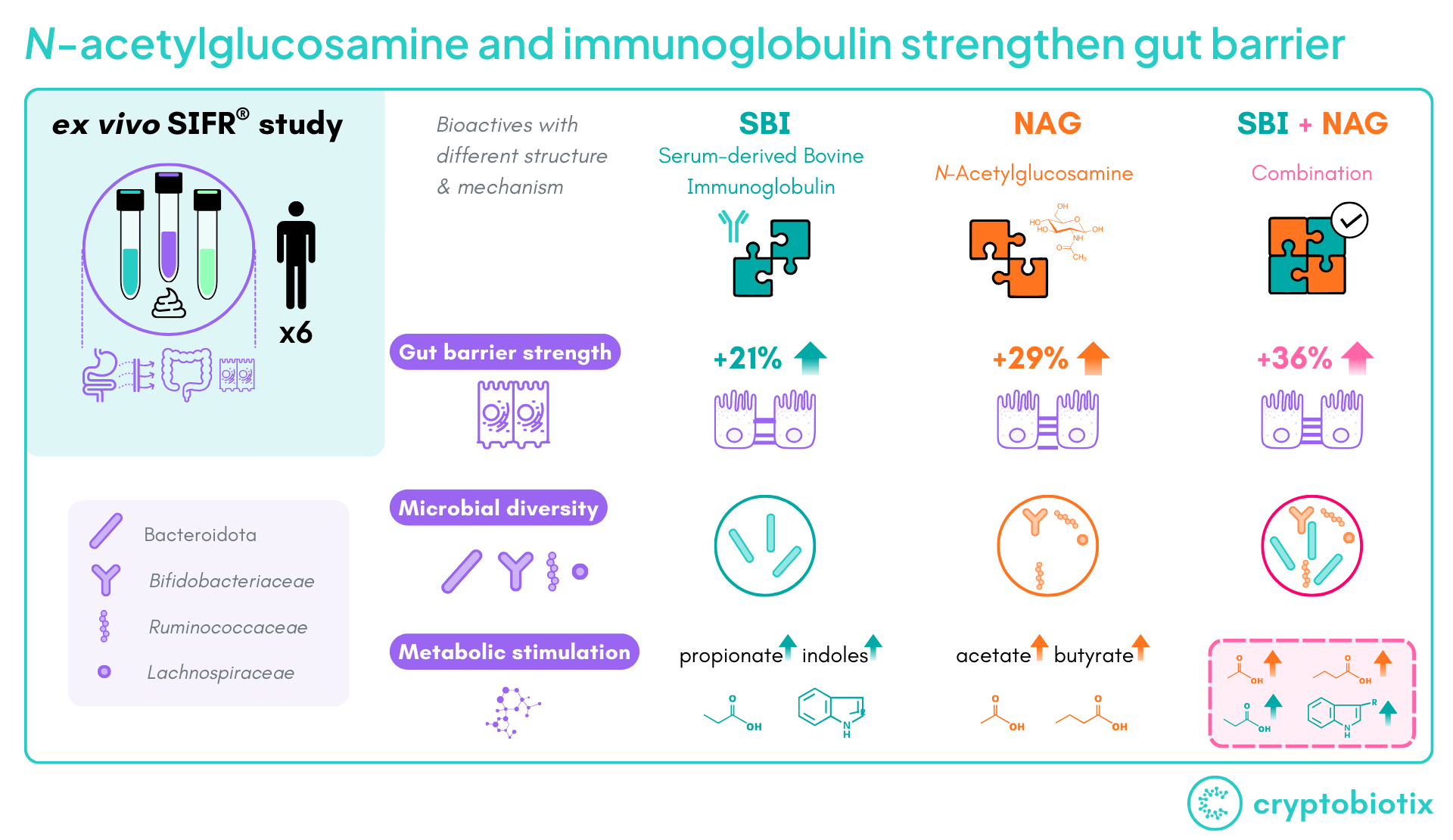
Gut barrier integrity is a key determinant of gastrointestinal and systemic health, often affected before clinical symptoms become apparent. Even mild barrier dysfunction can promote the translocation of microbial components and metabolites, contributing to low-grade inflammation and metabolic imbalance. These processes are increasingly linked to functional gut disorders, metabolic dysfunction and immune-related conditions, driving interest in nutritional strategies that address the gut ecosystem as a whole. In this context, the combination of bioactives with different structures and mechanisms of action is emerging as a promising approach. In the present study, Cryptobiotix and Designs for Health investigated whether serum-derived bovine immunoglobulin (SBI) and N-acetylglucosamine (NAG) could be combined to strengthen gut barrier integrity through complementary microbiome modulation.
The study used the validated ex vivo SIFR® (Systemic Intestinal Fermentation Research) technology, integrating faecal microbiota from six healthy adults to capture interindividual variability, and coupling it to a human epithelial–immune co-culture model (Caco-2/THP-1). SBI and NAG were tested alone and in combination. Both significantly improved transepithelial electrical resistance (TEER), a key marker of gut barrier integrity, while the combined intervention delivered the strongest effect. Mechanistically, SBI and NAG acted through distinct, non-redundant pathways. SBI primarily stimulated propionate-producing bacteria within the Bacteroidota phylum and increased health-associated indole metabolites, whereas NAG preferentially promoted acetate- and butyrate-producing taxa, notably within Bifidobacteriaceae, Ruminococcaceae and Lachnospiraceae.
When combined, SBI and NAG integrated their complementary effects into a broader, more balanced microbiome response. The combination increased all three major short-chain fatty acids—acetate, propionate and butyrate—while enhancing microbiome responsiveness, as captured by the Community Modulation Score. This integrated metabolic profile coincided with the most pronounced improvement in gut barrier integrity under both basal and inflammatory conditions. Beyond the specific ingredients tested, these findings highlight the value of the SIFR technology pipeline for studying ingredient combinations, enabling evidence-based development of next-generation gut health solutions that restore microbial balance rather than amplifying a single pathway.
Full article: De Beul et al, 2026, Nutrients
Explore other relevant SIFR studies: