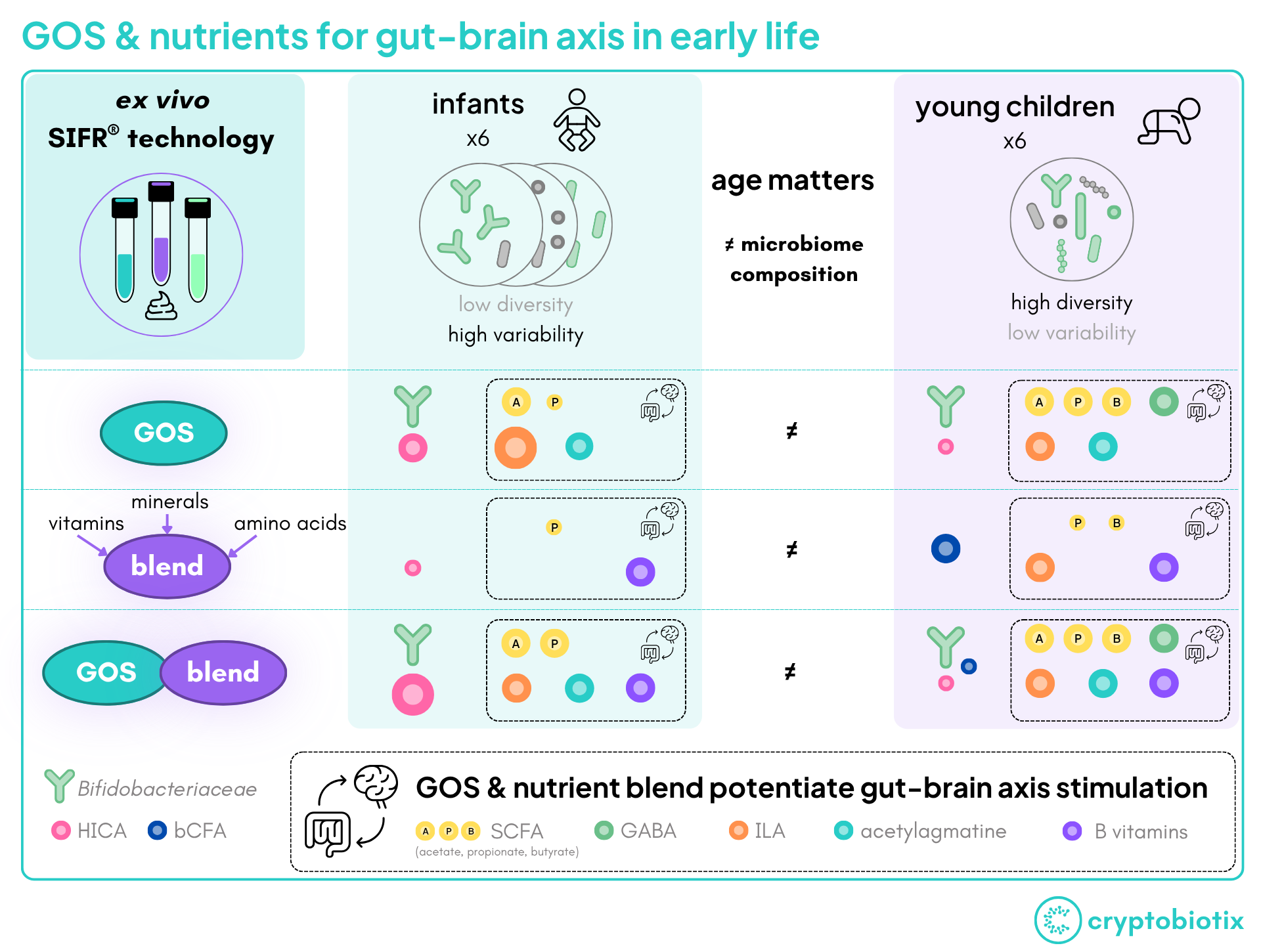
Targeted nutritional modulation of the microbiome can influence the production of key metabolites involved in gut-brain communication. Using the ex vivo SIFR® technology, galactooligosaccharides (GOS) were shown to stimulate bifidogenic activity and increase the production of short-chain fatty acids and other metabolites, including HICA and neuroactive metabolites like aromatic lactic acids, acetylagmatine, and GABA. The nutrient blend alone provided vitamins (including B vitamins), minerals and amino acids, as would be present in infant formula. The combination of GOS and the nutrient blend potentiated the gut-brain axis stimulation.
The impact of nutritional interventions was strongly dependent on microbiome maturity. Infant microbiomes, characterised by lower diversity and higher variability. In contrast, microbiomes from young children displayed higher diversity and a more homogeneous microbial makeup. These differences translated into distinct profiles of gut–brain axis metabolites, demonstrating that age and microbiome development are critical factors in determining functional responses to nutrition.
The SIFR® technology enables the high-resolution, ex vivo assessment of microbiome functionality using human-derived samples, preserving inter-individual variability while allowing controlled testing of nutritional interventions. In this study, it provided detailed insights into metabolite-level responses across age groups, supporting the identification of synergistic effects between GOS and nutrient blends. This approach offers a translational bridge between preclinical testing and clinical outcomes, enabling the development of targeted, microbiome-driven solutions for early-life nutrition.
Full article: Ferrier et al., 2026, Metabolites
Explore related SIFR® studies: