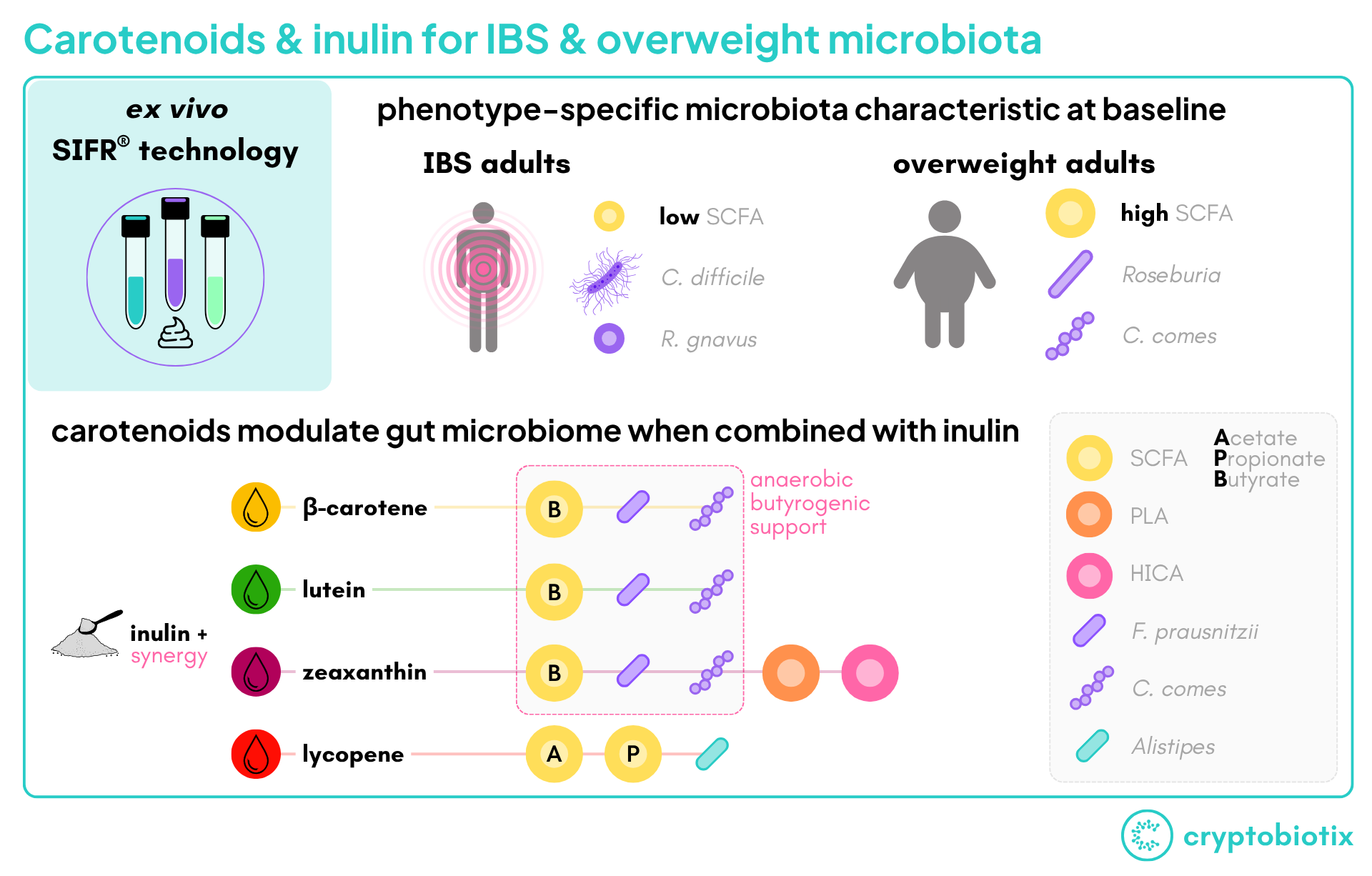
Carotenoids are well known for their antioxidant and anti-inflammatory properties, but because 60–90% of the ingested dose can reach the colon, their interactions with the gut microbiome could also contribute to their health effects. Using the predictive, ex vivo SIFR® technology pipeline, researchers from dsm-firmenich and Cryptobiotix investigated how β-carotene, lutein, lycopene and zeaxanthin, tested at three biologically relevant doses, influence gut microbiome composition and metabolic activity when administered alone or together with 2.5 g/day of the prebiotic inulin. Fresh microbiota from six adults with irritable bowel syndrome (IBS) and six healthy adults with overweight were individually tested during 24-hour ex vivo fermentations.
Carotenoids alone had only minor effects on microbial composition, but their combination with inulin significantly altered the microbiome in both the IBS (P=0.0126) and overweight (P=0.0001) cohorts and generally enhanced short-chain fatty acid production compared with inulin alone. Most carotenoids increased butyrate production, with the strongest effects observed for 2 mg/day zeaxanthin in IBS microbiota (+7.6%) and 60 mg/day lutein in overweight microbiota (+8.0%).
These responses were associated with specific microbial shifts: in IBS microbiota, carotenoid–inulin combinations, particularly those containing zeaxanthin, stimulated the butyrate producers Faecalibacterium prausnitzii and Coprococcus comes, while lycopene uniquely promoted acetate- and propionate-associated bacteria and increased acetate (+3.5%) and propionate (+8.0%) while reducing butyrate (−7.5%). Zeaxanthin also enhanced inulin-driven production of the health-related metabolites 3-phenyllactic acid and 2-hydroxyisocaproic acid, particularly in IBS microbiota.
The findings demonstrate that the microbiome effects of carotenoids depend strongly on the nutritional context in which they are consumed: limited effects were observed when carotenoids were tested alone, while combining them with inulin generated distinct changes in microbial composition and metabolite production. The carotenoid-specific and cohort-specific responses further show that ingredients can interact differently with microbiomes associated with IBS and overweight, highlighting the value of testing nutritional combinations across relevant target populations.
Full article: Steinert et al, 2026, BMC Microbiol
Explore other, relevant SIFR studies: