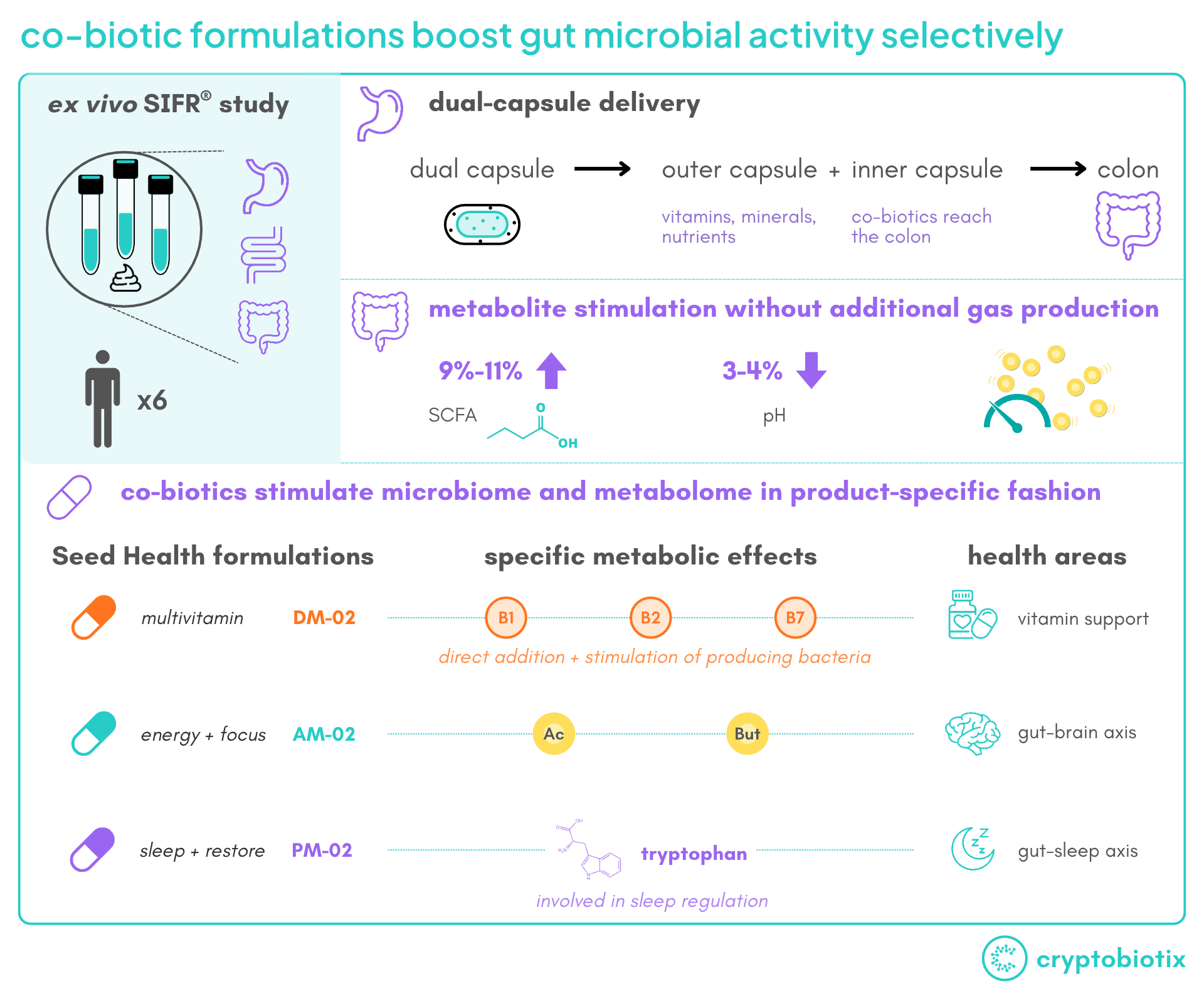
Co-biotics are compounds that modulate biological processes in both the host and microbiome to confer a health benefit. While probiotics introduce live microorganisms, and prebiotics selectively feed existing microbes, co-biotics represent a distinct category acting on host cell biology and microbiome activity in parallel. In the present study, Seed Health evaluated three novel formulations engineered with a dual-capsule delivery system: DM-02, a multivitamin; AM-02, formulated for energy and focus; and PM-02, formulated to promote sleep. All three share the same inner capsule, delivering the co-biotics quercetin and vitamins B1, B2 and B3 to the colon.
The three formulations underwent simulated upper gastrointestinal digestion, followed by 24-hour colonic fermentation using Cryptobiotix’s SIFR® technology with faecal microbiota from six healthy adults. All three formulations significantly reduced pH (3%–4%) and increased total SCFAs (9%–11%) and acetate (9%–12%), with AM-02 and PM-02 also increasing butyrate by 20% and propionate by 7%–8%, without increasing gas production. Each formulation significantly enriched specific SCFA- and B-vitamin-producing taxa.
AM-02 significantly increased the abundance of two pathways of pyruvate fermentation to acetate/lactate. PM-02 significantly increased the abundance of two tryptophan biosynthesis pathways, accompanied by an increase in available tryptophan and the abundance of tryptophan-producing microbes. All three formulations increased the availability of microbiome-derived metabolites, indicating functional modulation of the microbiome.
Previous studies have shown that fibre-based prebiotics, such as inulin, can increase both SCFA and gas production. In contrast, the three formulations increased production of health-associated metabolites and selectively enriched beneficial microbial taxa, all without increasing gas production. These findings provide a mechanistic foundation for future clinical studies investigating the potential of co-biotic formulations to modulate gut microbiome function without increasing gas-related effects.
Full article: Napier et al, 2026, Appl Environ Microbiol
Explore other, relevant SIFR studies: